If your ears itch, swell or weep every time you wear a pretty pair of earrings, you’re in very good company. Sensitive ears are one of the most common complaints we hear about, and the culprit is almost always the same: nickel. The good news? Once you understand what’s actually irritating your ears, choosing earrings you can wear comfortably all day becomes much, much easier.
This guide walks you through why ears react, what “hypoallergenic” really means (and doesn’t mean), which metals to look for, and how to build an earring collection that won’t leave you red and itchy by lunchtime.
Best earrings for sensitive ears:
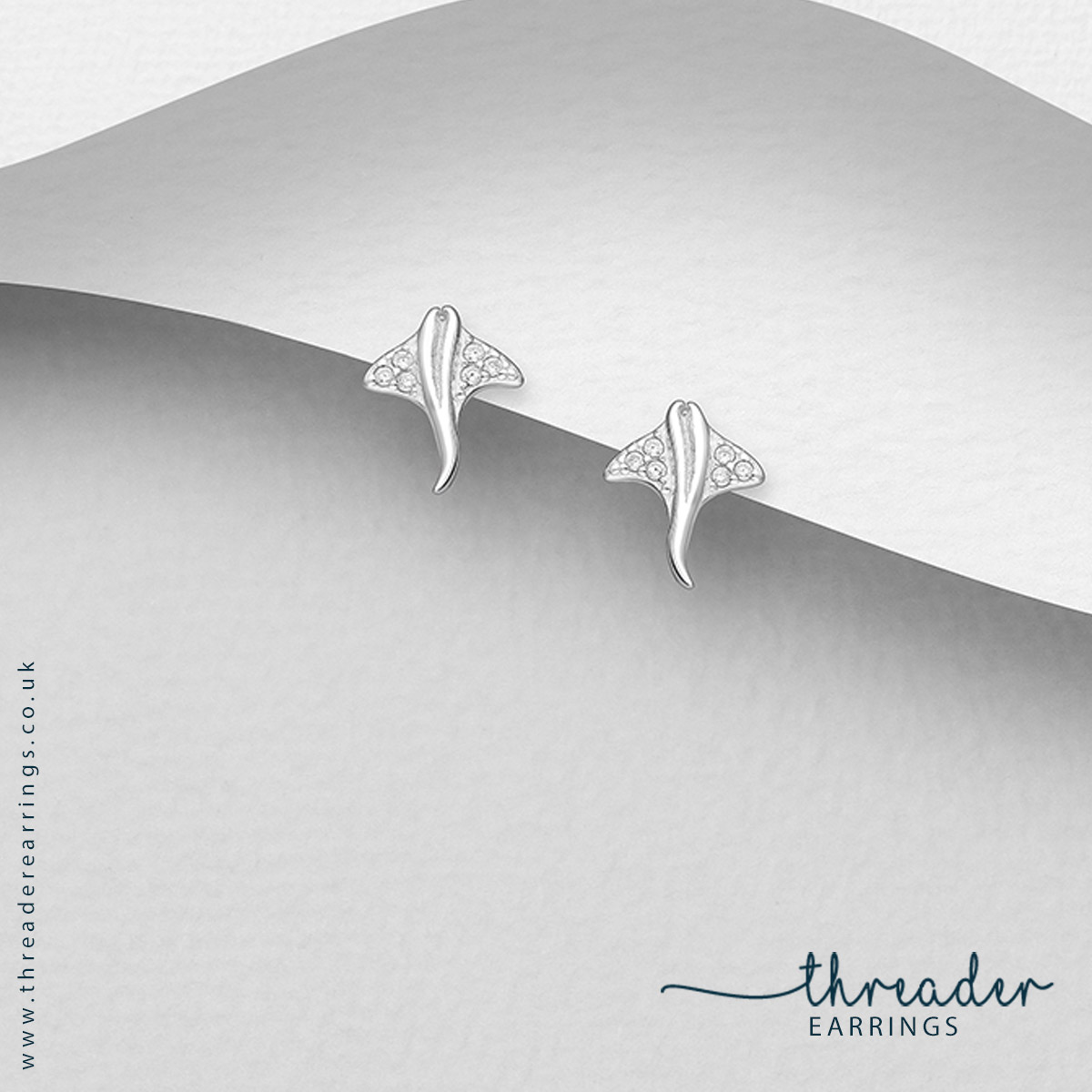
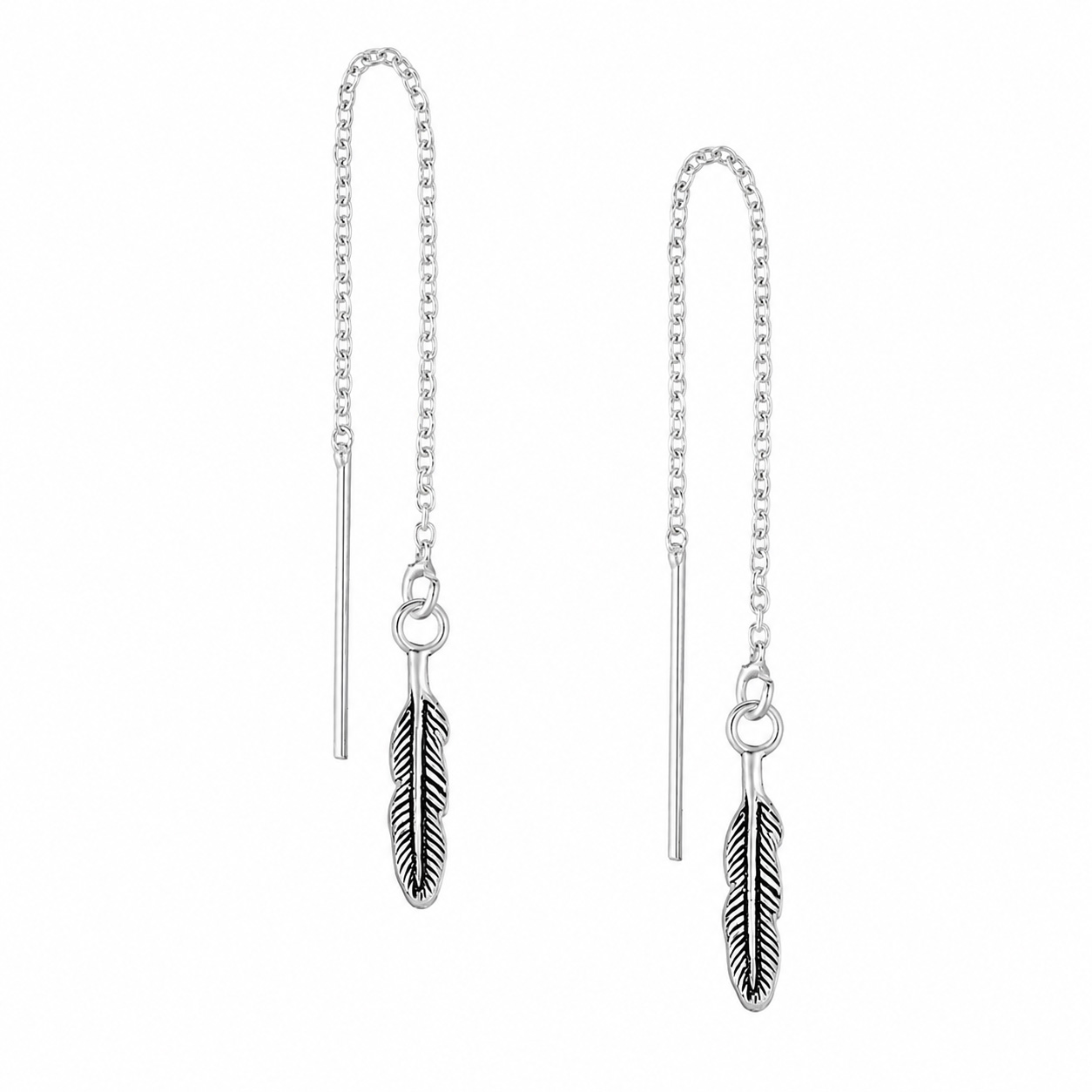
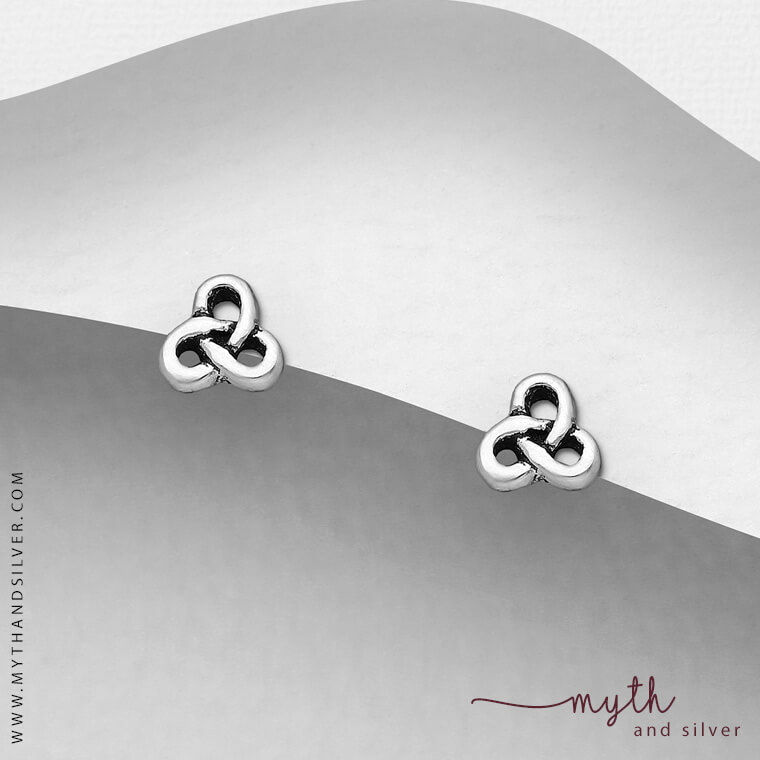
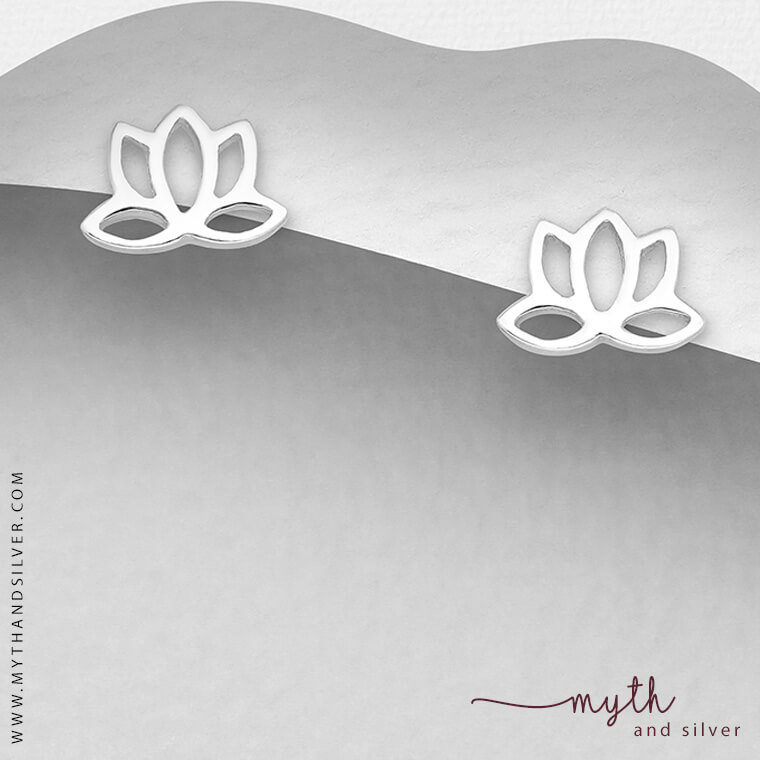
A hand-picked selection of 925 sterling silver earrings for sensitive ears, including lightweight threaders and comfortable everyday studs. Solid silver throughout (including posts and backs where applicable), with no base-metal plating to wear through – just easy-to-wear styles chosen with sensitive ears in mind.




Why do my ears react to earrings?
In most cases, sore itchy earlobes are a form of allergic contact dermatitis – an immune reaction that happens when your skin touches something it has become sensitised to. The NHS lists metals such as nickel or cobalt in jewellery among the most common triggers of allergic contact dermatitis (NHS, 2023), and nickel allergy is one of the most common causes of contact allergic dermatitis of all, with the earlobes – thanks to earrings – among the most frequently affected sites. Reactions range from intensely itchy, red and blistered skin in the acute stage to dry, thickened and pigmented skin when it becomes chronic (DermNet, 2024a).
It’s worth knowing that your ears can betray you at any point. Some people react to nickel-containing items after only brief contact, while others wear them happily for years and then suddenly break out in a rash (DermNet, 2024b). And once you’re sensitised, it tends to stick around – allergic contact dermatitis to metal jewellery can develop at any age, is most often due to nickel or cobalt, and once it has occurred it persists for many years, often life-long (DermNet, 2024b).
One more thing worth flagging: not every reaction is a true allergy – irritant contact dermatitis can be provoked by friction, surface particles and dirt on the metal, or soap and water trapped under the jewellery (DermNet, 2024b). That’s one reason keeping earrings clean and dry matters, whatever they’re made of.
Nickel: the number one offender
Nickel deserves its bad reputation. It’s cheap, hard-wearing and silvery in colour, which is exactly why it’s often used to create a white colour in gold jewellery, and its low cost lends itself to widespread use in the costume jewellery industry, where it’s often found in plating layers (Sheffield Assay Office, 2025).
The link with ear piercing is well established. A landmark British study found that ear piercing significantly increases nickel sensitivity in women, with more than half of women with pierced ears reporting skin reactions to metallic jewellery (McDonagh et al., 1992). Allergy UK agrees: nickel allergy commonly develops following ear piercing and the use of metal jewellery (Allergy UK, 2022).
Why is piercing such a big deal? Because a piercing puts metal in direct, prolonged contact with broken skin – the perfect conditions for your immune system to “learn” nickel as an enemy. Nickel allergy isn’t inherited but acquired through direct and prolonged skin contact with items releasing high levels of nickel — and once you’re allergic, it takes less nickel to trigger a reaction than it took to sensitise you in the first place (Nickel Institute, 2024). In other words, one bad pair of cheap earrings when you’re younger can set you up for a lifetime of careful shopping.
Isn’t nickel in earrings regulated in the UK?
Yes – and this is genuinely reassuring, though it’s not the whole story. Nickel in jewellery is covered by legislation: products that come into direct and prolonged contact with the skin must not release nickel more quickly than a specific rate, with additional, stricter rules for post assemblies used in piercings (Bromley Trading Standards, 2024).
The specifics, if you like detail: any post assembly for use in piercings must have a rate of nickel release below 0.2 micrograms per square centimetre per week — and the “post assembly” means the part inserted into the piercing plus anything holding it against the wound, such as the butterfly back (Bromley Trading Standards, 2024). A crucial subtlety here is that the law limits how much nickel migrates out of the article rather than how much the alloy contains – and there’s no correlation between the two (Sheffield Assay Office, 2025).
So why do people still react? Three reasons:
- Highly sensitive people react to tiny amounts. Classic research showed that the most nickel-sensitive patients reacted to as little as 0.05 micrograms of nickel (Fischer et al., 1984) – well below what regulations were designed around. A small proportion of nickel-allergic people are hyper-sensitive, reacting to lower amounts than is typical, and need extra precautions (Nickel Institute, 2024).
- Not everything on sale complies. Cheap imported fashion jewellery, particularly from online marketplaces, doesn’t always meet UK standards.
- Older jewellery predates the rules. That vintage pair from a charity shop or your gran’s jewellery box may release far more nickel than anything sold legally today.
What does “hypoallergenic” actually mean?
Here’s the uncomfortable truth: not much. “Hypoallergenic” isn’t a legally defined term for jewellery, so it’s essentially a marketing word. And the research backs up a healthy scepticism – a well-known study of earrings and ear-piercing kits found that all earring types tested, including those labelled “hypoallergenic”, released measurable nickel (Fischer et al., 1984).
Even genuinely nickel-free metals aren’t a 100% guarantee for everyone. A recent case report documented earlobe eczema caused by a nickel-free rhodium earring – a metal widely marketed as non-allergenic (García Núñez and Algaba-Marmol, 2024). Cases like this are rare, but they’re a useful reminder that “hypoallergenic” means less likely to cause a reaction – never impossible.
The practical takeaway: don’t buy on the word “hypoallergenic” alone. Buy on the actual metal composition, from a seller who can tell you exactly what their earrings are made of.
The problem with plated earrings
Gold-plated and silver-plated earrings look like the real thing at a fraction of the price – but for sensitive ears they’re often a false economy. The plating is a thin surface layer, usually over a cheaper base metal, and silver-plated jewellery is a base metal (which may contain nickel) plated with a fine layer of silver alloy (DermNet, 2024b).
Research confirms that gold and silver plating do not reliably prevent nickel release from the alloy underneath (Fischer et al., 1984). Plating also wears away – with skin contact, sweat, perfume and general life, that protective layer thins over months of wear, gradually exposing whatever lies beneath. So a plated pair that felt fine at first can start causing trouble later, leaving you wondering whether you’ve “suddenly” developed an allergy when really it’s just the plating giving up.
If your ears are sensitive, solid metals beat plated ones every time.
Is sterling silver hypoallergenic? What 925 actually means
Sterling silver is one of the best everyday choices for sensitive ears — but it pays to understand what you’re buying.
Pure silver is 99.9% silver but is too soft and malleable for practical jewellery making, so sterling silver – 92.5% pure silver alloyed with copper – is the standard instead (DermNet, 2024b). That’s what the “925” stamp means: 925 parts per thousand pure silver.
Here’s the caveat: sterling silver is not automatically nickel-free. The 925 standard fixes the silver content at 92.5%, but says nothing about what makes up the remaining 7.5%. It’s usually copper – but in some cases a small percentage of other metals may be in the mix, so traces of nickel may be present (DermNet, 2024b). Reputable sellers will confirm their sterling silver is alloyed with copper and is nickel-free; if a seller can’t tell you, treat that as a red flag.
When it is nickel-free – as all the sterling silver earrings on this site are – sterling silver ticks a lot of boxes. Allergy UK notes that pure gold (18 carat or more), solid silver and platinum are usually safe alternatives for jewellery (Allergy UK, 2022), and DermNet similarly lists solid gold (12 carat or more) and silver jewellery as options that should be safe (DermNet, 2024a). It’s solid metal throughout, so there’s no plating to wear off, and it’s affordable enough to wear every day without wincing.
Which metals are best (and worst) for sensitive ears?
Here’s a quick comparison to keep handy:
| Metal | Sensitive-ear verdict | Worth knowing |
|---|---|---|
| Nickel-free sterling silver (925) | ✅ Excellent everyday choice | Solid metal, no plating to wear off; check the seller confirms it’s nickel-free |
| Solid gold (14ct+) | ✅ Very good | Lovely but pricey; the higher the carat, the purer the gold |
| Platinum | ✅ Very good | Superb but expensive; 22-carat gold and platinum are unlikely to cause problems (BSCA, n.d.) |
| Titanium (implant grade) | ✅ Very good | A great choice for fresh piercings |
| Surgical/stainless steel | ⚠️ Usually fine, but… | Can contain nickel; most releases very little, but the highly sensitive may still react |
| White gold | ⚠️ Check the alloy | Sometimes whitened with nickel; both white and yellow gold have been shown to cause reactions in sensitive individuals (Cornetta and Reiter, 2001) |
| Gold- or silver-plated | ❌ Avoid | Plating wears through and doesn’t reliably block nickel release (Fischer et al., 1984) |
| Unbranded “mystery metal” fashion earrings | ❌ Avoid | If nobody can tell you what it’s made of, your earlobes will find out the hard way |
Remember, just because a retailer claims that an item is Sterling Silver, does not mean that it really is. This is a real problem on marketplaces like Amazon, Temu and Ebay.
Posts and backs matter too
People often forget that it’s not just the decorative front of an earring that touches your skin — the post sits inside your piercing, and the back presses against the earlobe for hours. That’s precisely why UK rules on nickel release apply to the whole post assembly: the part inserted into the piercing plus anything that holds it in place, such as the ball or butterfly (Business Companion, 2024).
Practical pointers:
- Check the post metal, not just the front. Some cheaper earrings pair a decent front with a base-metal post – the worst possible combination for sensitive ears.
- Choose matching backs. Sterling silver butterfly backs on sterling silver studs keep everything consistent. Swapping in random spare backs from the bottom of your jewellery box can reintroduce mystery metals.
- Silicone-covered backs can be a comfortable option if the skin behind your lobe is particularly reactive.
Interestingly, research with metal-hypersensitive patients found that covering the earring post to prevent metal-to-skin contact allowed occasional wear of earrings that would otherwise cause a reaction, and that nickel-free earrings allowed hypersensitive patients to wear earrings for short periods without reacting (Cornetta and Reiter, 2001). But honestly? Starting with nickel-free metal in the first place is far simpler than working around the wrong one.
New piercings vs healed piercings
A fresh piercing is an open wound, and it needs stricter care than a healed one:
- Newly pierced ears: stick with your piercer’s recommended studs (ideally implant-grade titanium) for the full healing period. Don’t swap earrings early, however tempting the new pair is. Follow your piercer’s aftercare advice, and see our ear piercing aftercare guide for the full routine.
- Healed piercings: this is where nickel-free sterling silver comes into its own for everyday wear. Even so, if your ears are reactive, it’s sensible to give new earrings a trial run – wear them for a few hours at home first rather than committing to a 12-hour day.
And whatever the age of your piercing, take earrings out overnight where you can, keep them clean and dry, and remove them before swimming, showering and sport. Trapped moisture and product build-up can irritate even the most tolerant lobes.
When to stop wearing earrings and see a professional
We’re a jewellery shop, not a doctor’s surgery – so please treat everything above as general information rather than medical advice. Take your earrings out and speak to a pharmacist or your GP if:
- your earlobes are persistently red, itchy, weeping or crusted;
- a reaction doesn’t settle within a few days of removing the earrings;
- you see signs of infection in a piercing — increasing pain, heat, swelling or discharge;
- the rash starts spreading beyond your ears. Dermatitis can later affect areas not in contact with jewellery at all, particularly the hands (DermNet, 2024b).
If reactions keep happening even with metals that “should” be fine, ask about a referral for patch testing. It’s the only way to identify exactly which metal (or other substance) you’re allergic to – and given that undeclared alloys and unusual allergens like rhodium have been documented (García Núñez and Algaba-Marmol, 2024), knowing your specific trigger takes the guesswork out of shopping for good.