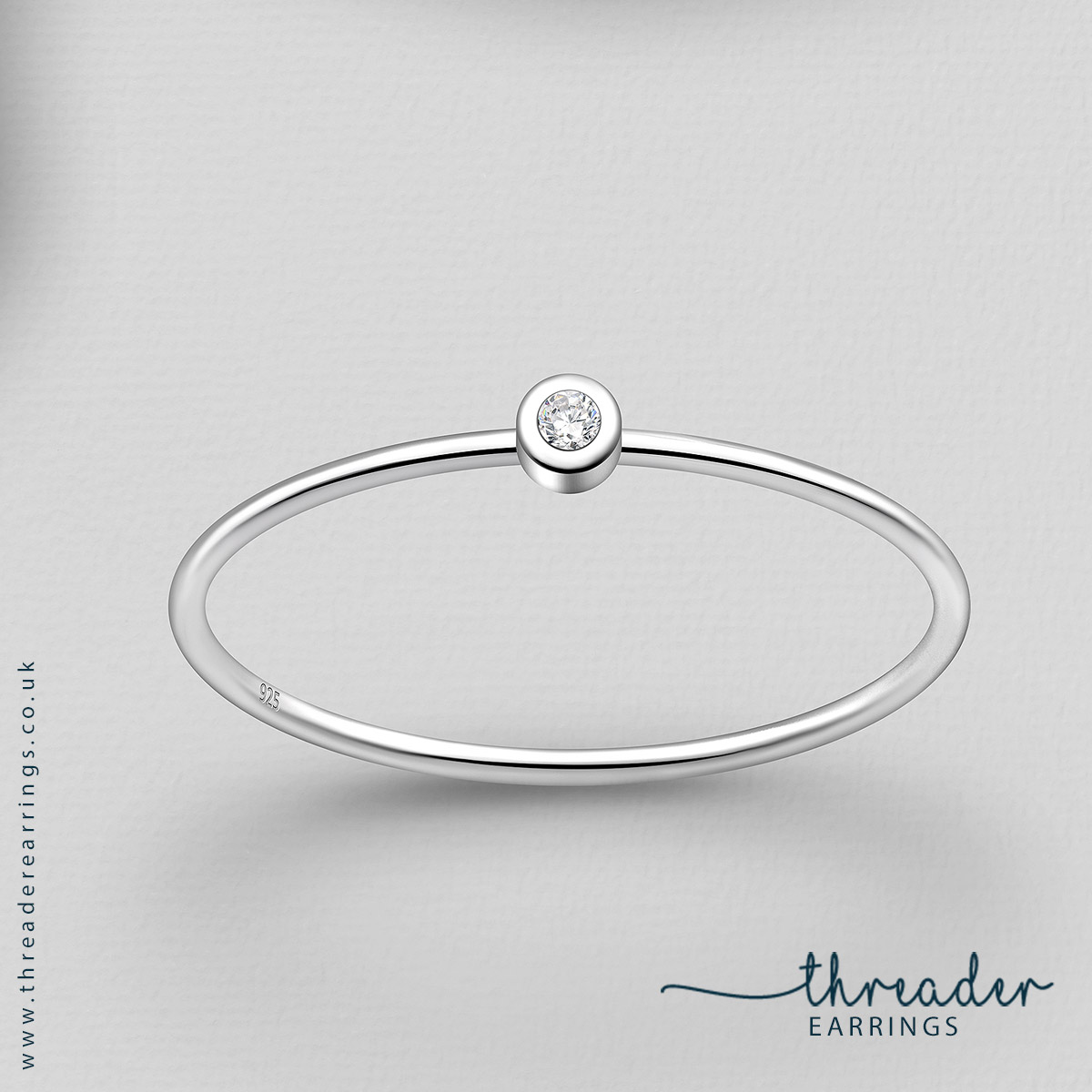
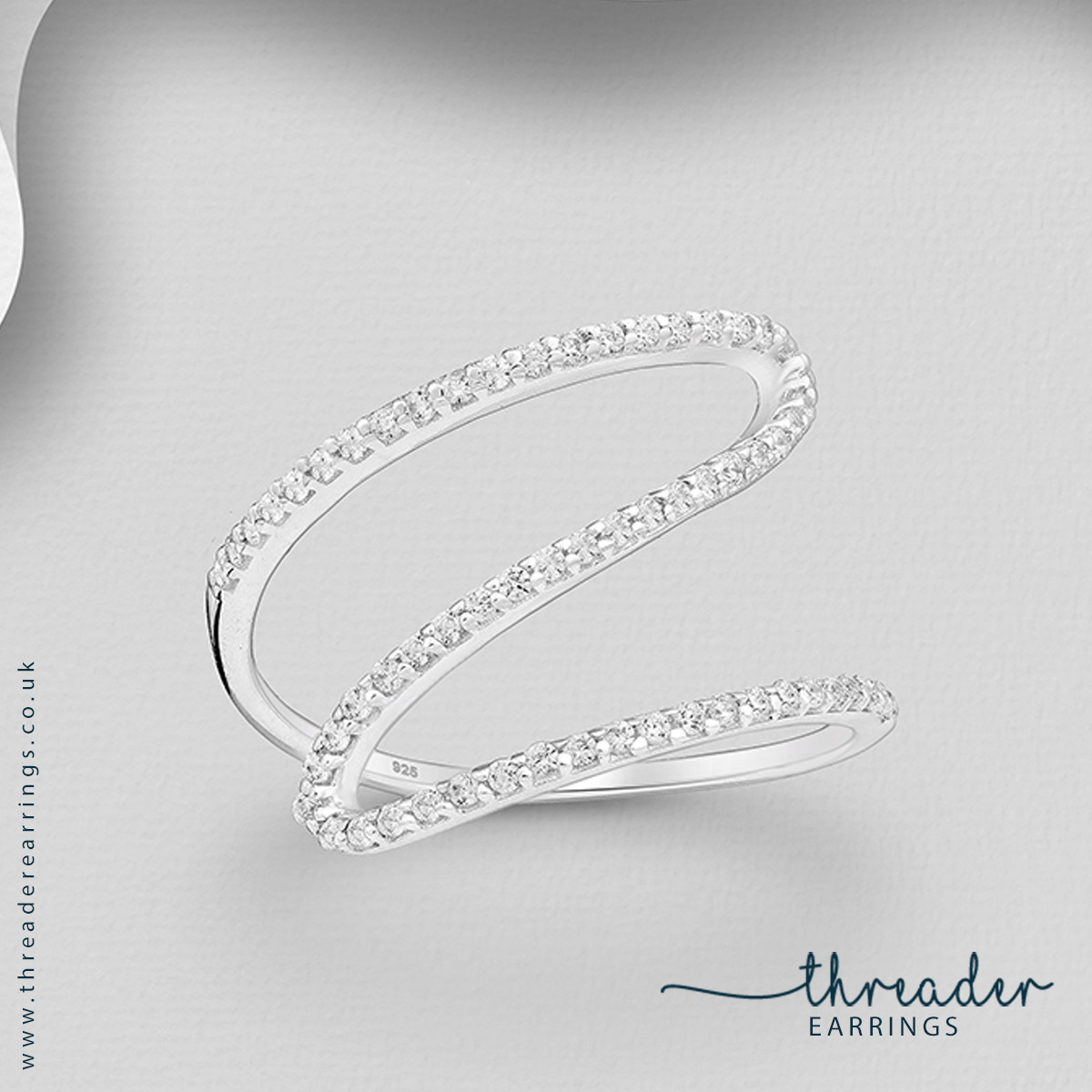
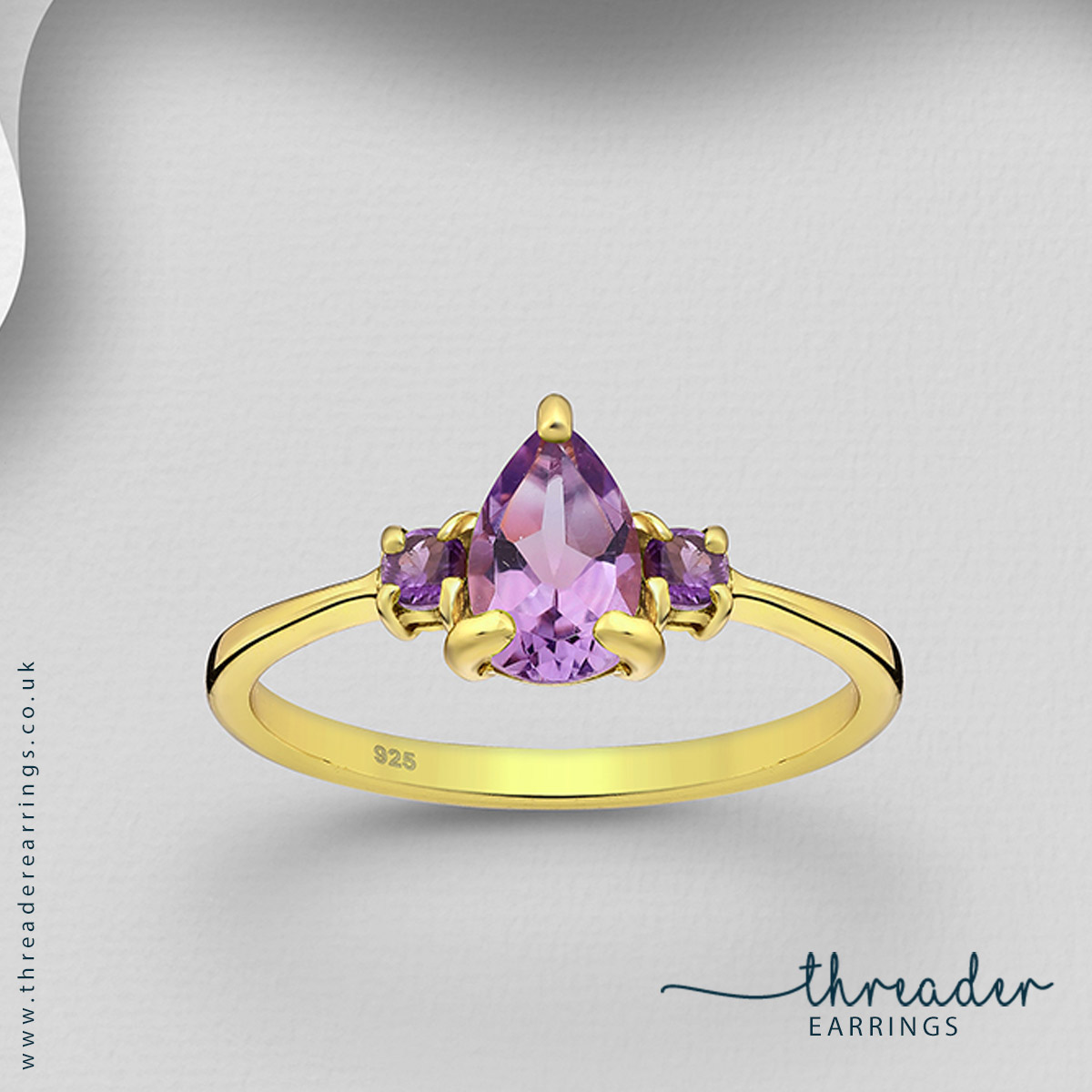
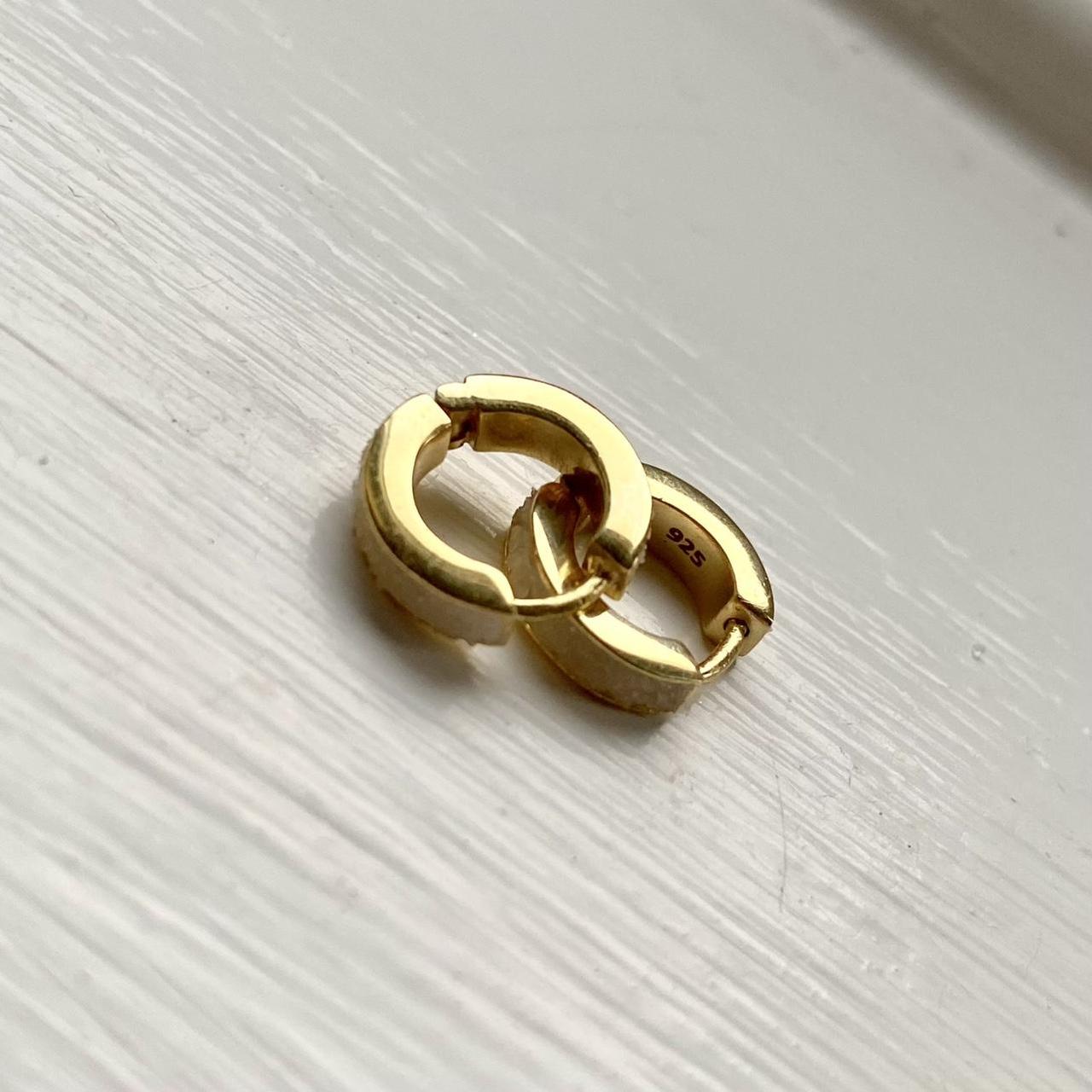
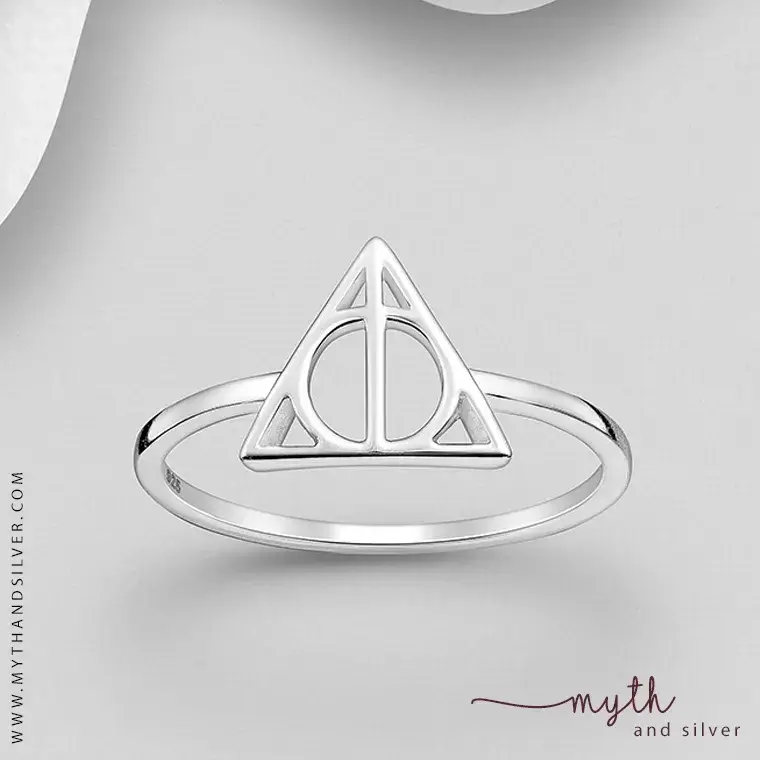
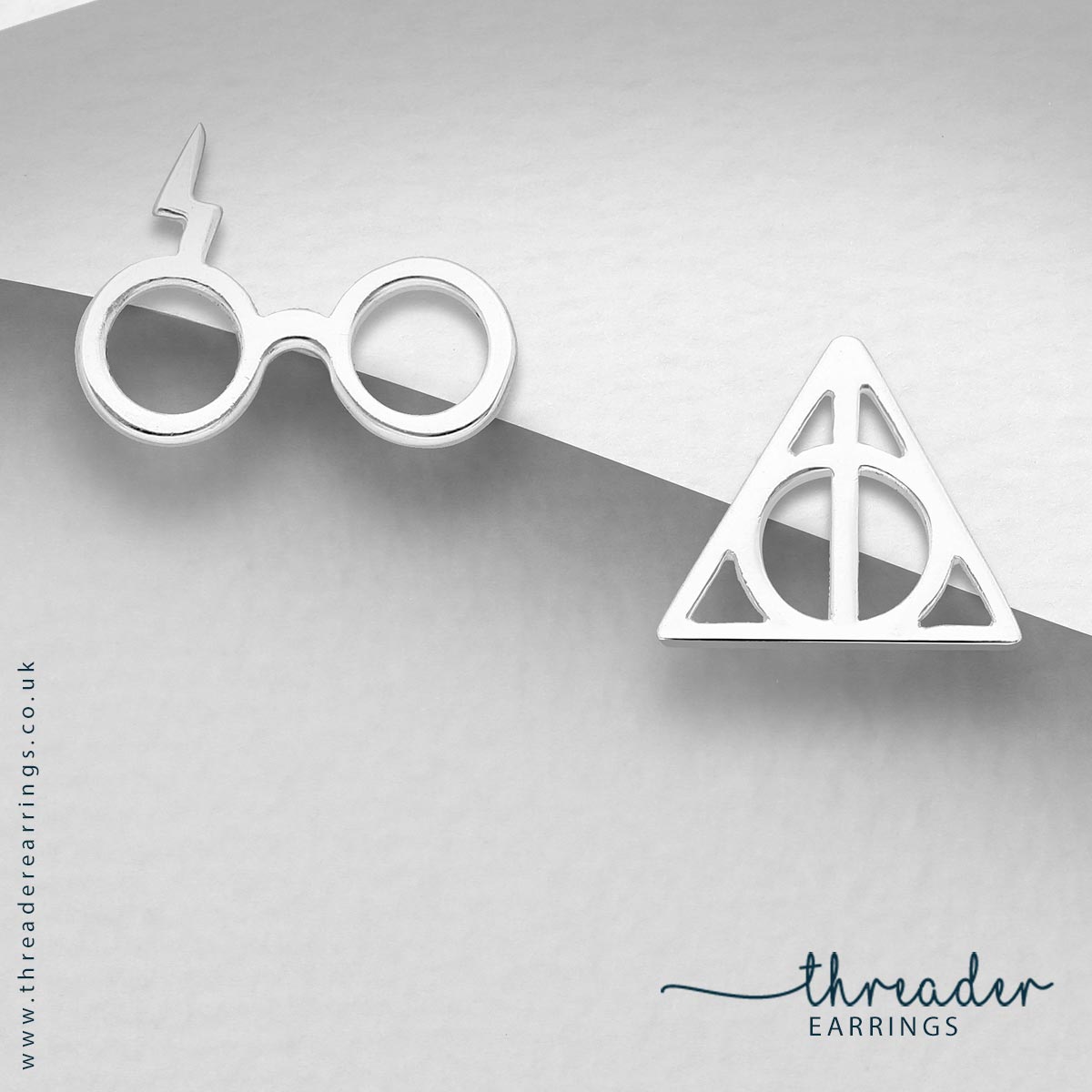
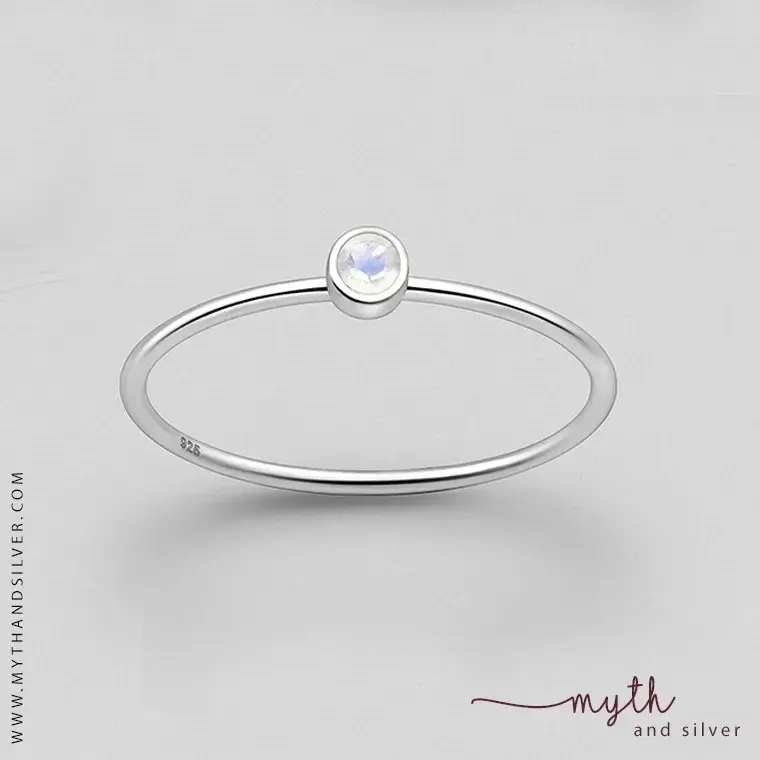
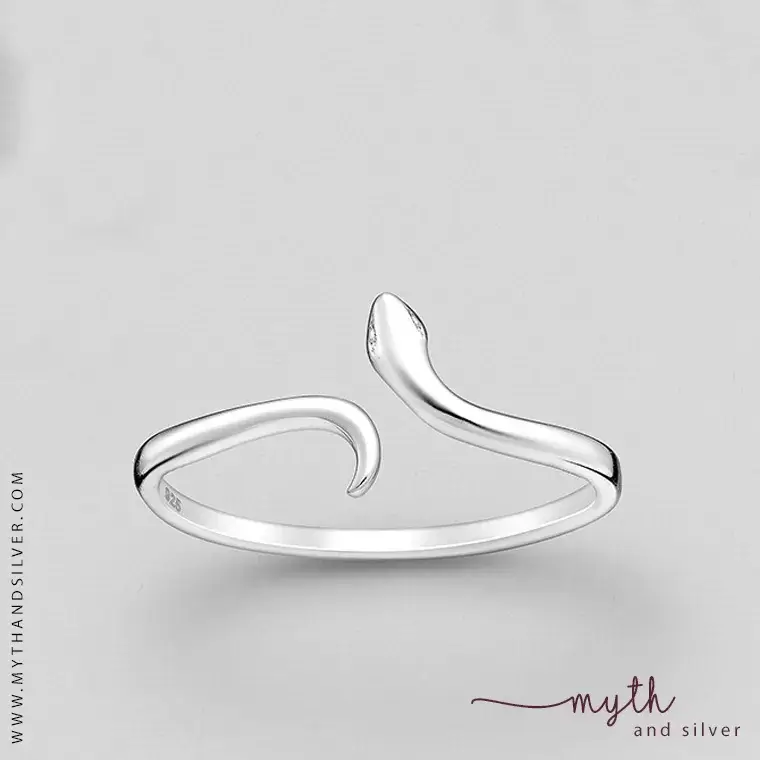
E-coating is one of the most important finishing technologies in modern jewellery, and one of the least explained. If you’ve ever owned a silver chain that stayed bright for years without polishing, or a gold-plated piece that kept its colour long after cheaper equivalents faded, e-coating was almost certainly doing the work. Yet most retailers bury it under vague phrases like “anti-tarnish treated” or “protective finish” without ever explaining what’s actually on your jewellery.
This guide covers everything: what e-coating is, how it’s applied, how it compares with electroplating and other finishes, how long it lasts, how to care for it, and what to do when it eventually wears. Some of the jewellery sold here at threaderearrings.co.uk is e-coated (scroll down to see our e-coat collection), so this is also a practical owner’s manual for your own pieces.
What is e-coating?
E-coating – short for electrophoretic coating, and sometimes called electro-lacquering, e-lacquer or cataphoretic coating – is the electrophoretic deposition of a transparent organic clearcoat that protects metal surfaces from scratches, tarnishing and gloss loss (Zanella, Fedel and Deflorian, 2012).
In plain terms: the finished piece of jewellery is submerged in a water-based bath containing microscopic particles of lacquer, and a low DC voltage is applied. The jewellery and the particles carry opposite charges, so the particles are drawn to the metal and deposit as a perfectly even film across the entire surface – including crevices, engraving and fine detail that a brush or spray could never coat uniformly. The piece is then baked, curing the film into a hard, ultra-thin polymer shell. The finished coating is typically only a few microns thick (a human hair is around 70 microns) and is effectively invisible.
Two things distinguish e-coating from simply dipping jewellery in varnish. First, the electrical deposition produces uniform coverage: the coating builds evenly everywhere current flows, then effectively self-limits as the insulating film forms, so you don’t get drips, pooling or thin patches. Second, the electrophoretic process typically yields good adhesion to the substrate and forms a compact, protective layer (Zanella, Fedel and Deflorian, 2012) – the film is bonded on, not just sitting on top, which is why properly applied e-coat wears gradually rather than chipping or flaking off.
Where the technology comes from
E-coating wasn’t invented for jewellery. It was developed industrially in the mid-twentieth century and became the standard primer process for car bodies, where whole vehicle shells are dunked in enormous electro-deposition tanks to give them corrosion protection in every seam and cavity. The same principle protects white goods, electronics and architectural hardware.
The jewellery industry adopted it because it solved a very old problem: transparent organic clearcoats serve as a protective barrier for noble metal layers, with wide application in costume jewellery and glass-frame (spectacle) manufacturing, guarding against scratches, tarnishing and changes in gloss caused by interaction with the environment and human skin (Zanella, Fedel and Deflorian, 2012). Traditional hand-applied lacquers did this poorly – unevenly, with weak adhesion. Electrodeposited organic coatings have been specifically investigated as an alternative to conventional clearcoat application methods, and both anodic and cathodic deposition modes have been used on noble metal substrates, with cathodic e-coats the more established variant for corrosion protection (Zanella, Fedel and Deflorian, 2012).
How the process works, step by step
Professional e-coating follows a strict sequence. Cleanliness at each stage is what separates a flawless, long-lasting finish from one that clouds or peels.
- Polishing. The piece is brought to its final surface finish first – high polish, satin or matte – because the transparent coat will preserve whatever texture lies beneath it.
- Cleaning. The piece is degreased, usually ultrasonically and then electrolytically. Any trace of oil, dust, polishing compound or oxide will prevent the coating from bonding. Even a fingerprint can cause a defect.
- Rinsing. Multiple rinses in distilled or deionised water remove cleaning residues, sometimes with a mild acid dip in between to activate the metal surface.
- Immersion. The piece is hung on a conductive rack and lowered into the e-coating bath – water plus suspended lacquer particles, most commonly acrylic or nano-ceramic hybrid formulations.
- Deposition. A controlled voltage drives the charged particles onto the metal. This stage demands real skill: because the substrates are noble metals, their electrochemical reactivity during deposition can influence the final coating thickness and defect presence, making deposition parameters critical to coating quality (Zanella, Fedel and Deflorian, 2012). Too thin and the coat wears prematurely; too thick and it risks visible edges, bubbling or chipping.
- Rinsing off excess. Unbonded particles are washed away, often with a rinse aid to prevent water spotting on the still-soft film.
- Curing. The piece is baked – typically somewhere between 120°C and 180°C depending on the formulation – hardening the film into its final durable state. Some modern systems cure with ultraviolet light instead, which is faster but chemically similar in outcome.
- Inspection. The cooled piece is examined under light for clarity, coverage and defects, and re-coated if anything is found.
None of this is guesswork. Coating performance is assessed scientifically using electrochemical impedance spectroscopy and polarisation curves to correlate deposition parameters with coating quality (Zanella, Fedel and Deflorian, 2012) – meaning the process is measurable, repeatable and well understood when carried out by a competent workshop.
What e-coating does for your jewellery
- Stops tarnish. Tarnish is a chemical reaction between metal and its environment – sulphur compounds, moisture, skin oils, air pollution. The e-coat seals the surface, so sterling silver stays white and brass doesn’t turn brown or green for as long as the coating is intact. You’re looking at the metal through an airtight window.
- Resists scratches. The cured polymer is harder than soft precious metals, so it absorbs everyday scuffs instead of the metal beneath. Fine scratches in a coating can often be professionally buffed out; scratches in gold cannot be undone so easily.
- Preserves plating. On gold-plated and vermeil pieces, the e-coat takes the friction that would otherwise wear the thin gold layer away. This is arguably its most valuable job in fashion jewellery, and it’s why plated pieces with an e-coat routinely outlast identical pieces without one several times over.
- Locks in decorative finishes. Oxidised (blackened) silver detailing, satin textures and two-tone effects all wear or change with handling. A clearcoat freezes them in place.
- Acts as a skin barrier. The film sits between metal and skin, reducing contact with alloying metals – helpful for people with mild sensitivities, though not a guaranteed fix for a diagnosed allergy (more on this below).
- Cuts maintenance to almost nothing. No silver dip, no weekly polishing, no anti-tarnish strips. A wipe with a soft cloth is genuinely all routine care requires.
E-coating vs electroplating: what’s the difference?
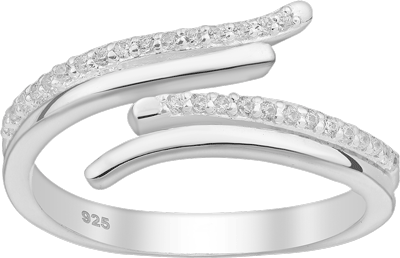
The two are easily confused because both use an electrified bath and look superficially similar in the workshop, but they do fundamentally different jobs. Electroplating deposits a metallic layer – gold, rhodium, palladium or ruthenium – onto a substrate using direct current through electrolysis, providing decorative colour and corrosion resistance (Giurlani et al., 2019; Galanin and Romanov, 2025). E-coating deposits a transparent organic polymer on top of, or instead of, that metallic layer to protect it. Where electroplating adds a metallic layer, e-coating adds a clear film that preserves its appearance.
| E-coating | Electroplating | |
|---|---|---|
| What’s deposited | Transparent (or tinted) organic polymer | A layer of real metal – gold, rhodium, ruthenium etc. |
| Primary purpose | Protection: anti-tarnish, anti-scratch, gloss retention | Decoration: colour, lustre, plus corrosion resistance |
| Effect on appearance | Essentially invisible | Changes the colour of the piece |
| Typical thickness | A few microns or less | Fractions of a micron (“flash”) up to several microns |
| Wears how? | Gradually thins with friction; no colour change | Rubs through to reveal contrasting base metal |
| Cost of material | Low (polymer lacquer) | Can be high (precious metal) |
For completeness, there’s a third family you may encounter: conversion coatings, such as the anodising used to produce decorative colour effects on titanium by growing an oxide layer on the metal itself (Galanin et al., 2024). That’s a different mechanism again – the colour comes from the metal’s own transformed surface rather than anything deposited onto it.
The important point is that plating and e-coating are complementary, not rivals. Noble metal coatings such as gold and palladium are widely electroplated to improve corrosion resistance in both the electronics and jewellery industries, and e-coats serve as an additional protective layer over these metallic deposits (Giurlani et al., 2019). A typical high-quality fashion piece today is base metal or silver, electroplated in gold for colour, then e-coated for endurance. Each layer does what it’s best at.
How e-coating compares with other protective finishes
Rhodium plating
Sterling silver is often plated with rhodium – a hard, bright white metal – for shine and tarnish resistance. It works well, but it’s metallic plating, so it subtly changes the colour (cooler and whiter than raw silver) and it too wears through eventually. Some manufacturers use rhodium, some clear e-coat, some both. E-coat is the more transparent option; rhodium the harder one.
Hand-applied lacquers and anti-tarnish dips
These are the low-tech ancestors of e-coating: the piece is dipped or sprayed with a clear varnish. Coverage is uneven, adhesion is weaker, and the coating tends to yellow, pool in recesses and flake at edges. E-coating exists precisely because these methods were inadequate.
PVD (physical vapour deposition)
A vacuum process that bonds a thin ceramic-metallic layer onto (usually) stainless steel – the technology behind most “gold” stainless steel watches. Extremely hard-wearing, but it’s a coloured coating for steel rather than a transparent protector for silver and plated pieces, and it requires expensive vacuum equipment. Different tool, different job.
Waxes and polishes
Temporary at best. A microcrystalline wax buys a silver piece a few weeks of tarnish delay; an e-coat buys it years.
Types of e-coating
Not all e-coats are the same formulation. The main families you’ll encounter:
- Acrylic clearcoats. The workhorse. Very clear, non-yellowing, slightly flexible (so resistant to cracking), with excellent tarnish protection. Most “anti-tarnish” treatments on commercial silver are this type.
- Nano-ceramic coatings. Hybrid formulations in which microscopic ceramic particles (such as silica) are embedded in the polymer matrix. The cured film is noticeably harder and more scratch-resistant, which makes these the premium choice for high-wear items such as rings. They’re still applied by exactly the same electrophoretic dip – “ceramic” refers to the particles, not a thick ceramic shell.
- Tinted and coloured e-coats. Any of the above can carry pigment. A pale yellow tint over silver gives a gold-tone look without gold; pinks give rose-gold effects; and vivid translucent colours – blues, greens, purples, blacks – allow fashion colours that no metal plating can produce, while the metallic lustre still shows through the film. This is a significant creative advantage: plating is limited to the colours of real metals, whereas tinted e-coats are limited only by pigment chemistry.
- UV-cured variants. Cured under ultraviolet lamps rather than in an oven. From the wearer’s point of view the result is the same; it’s simply a faster production method.
E-coating on different metals
Sterling silver
The most common application. Silver tarnishes readily – a clear e-coat keeps it bright for years rather than weeks. Purists sometimes note that coated silver can look fractionally warmer in tone than freshly polished bare silver; in practice the difference is barely perceptible, and the coated piece stays at that near-perfect state instead of dulling.
Gold-plated and vermeil pieces
Here e-coating earns its keep most obviously. Gold plating is thin – often 0.5 to 3 microns – and every touch removes a little. Sealing it under a clearcoat means the friction lands on the sacrificial polymer instead of the gold, dramatically extending the life of the colour. It also seals microscopic pores in the plating through which the base metal could otherwise begin to corrode.
Solid gold
High-carat gold doesn’t tarnish, so coating is rarely needed. It’s occasionally used to add scratch resistance to soft high-carat pieces, or to stop the copper content of rose gold darkening slightly over the years, but most solid gold is left bare.
Brass, copper and base metals
These corrode enthusiastically without protection, so virtually all decent-quality costume jewellery in these metals carries an e-coat or equivalent. It’s the difference between a piece that turns your finger green in a month and one that doesn’t.
Stainless steel
Steel doesn’t tarnish, but gold-toned steel benefits from a clearcoat over its coloured layer, and tinted e-coats are sometimes used to colour steel directly.
How long does e-coating last?
It’s durable, not permanent. Honest expectations, based on how much friction each type of piece endures:
- Earrings and pendants: frequently five years or more, because they experience almost no abrasion. Threader earrings are a best-case scenario – they hang freely and rarely rub against anything hard.
- Necklaces and chains: several years, with wear concentrated where the chain moves against the clasp and skin.
- Bracelets and bangles: moderate – they knock against desks, watches and each other.
- Rings: the toughest life of all. Constant gripping, hand-washing and contact with hard surfaces mean one to three years of daily wear is typical before the coating thins at contact points.
Wear is gradual rather than sudden. A clear coat doesn’t visibly “come off” – you may simply notice a little tarnish starting on high-contact edges of a silver piece, or a slight loss of gloss, which tells you the film has thinned there. The metal underneath is usually pristine, because the coating took the punishment; a jeweller can strip the remains and re-coat, restoring the piece fully.
Things that shorten a coating’s life: chlorinated pools and hot tubs, perfume or hairspray applied directly onto the piece, abrasive polishing cloths and pastes, silver dip solutions, prolonged intense sunlight, and repeated flexing (relevant only to thin bangles and cuffs, which shouldn’t be bent).
Is e-coated jewellery waterproof?
Water-resistant, genuinely. The sealed film means rain, hand-washing, showers and sweat can’t reach the metal, so ordinary wetting won’t cause tarnish or discolouration – the water only ever touches inert polymer. Most “waterproof jewellery” marketing traces back to exactly this technology, sometimes combined with a stainless steel base.
Two caveats. First, waterproof doesn’t mean invincible: chlorine and salt water are chemically aggressive and will age the film faster, so rinse pieces in fresh water and dry them after the sea or a pool. Second, “waterproof” describes tolerance, not an invitation – jewellery that spends less time soaking simply lasts longer, coated or not.
Caring for e-coated jewellery
The whole point of e-coating is minimal upkeep, but a few habits will maximise its life:
- Last on, first off. Apply perfume, lotion and hairspray, let them dry, then put your jewellery on. Take it off first when you get home, and before sport, cleaning, gardening or swimming.
- Clean gently. A soft, dry, lint-free cloth after wear is usually all that’s needed. For grime, use lukewarm water with a single drop of mild washing-up liquid, rinse in clean water, and dry completely before storing.
- Never use silver dip, metal polish, toothpaste or impregnated polishing cloths. All of these are designed to strip a surface layer – which in this case is the coating itself. This is the single most common way owners accidentally ruin an e-coated piece.
- Skip the ultrasonic cleaner unless the maker confirms it’s safe; aggressive cavitation can exploit any microscopic weakness in the film.
- Store pieces separately in pouches or a lined box, dry and away from direct sunlight, so coatings don’t scratch against other jewellery. You can skip the anti-tarnish strips – the coating is doing that job.
E-coating and gemstones
E-coating is designed for metal, and the immersion-plus-baking process complicates things for gem-set pieces:
- Hard stones – diamond, sapphire, ruby, most quartzes – tolerate the process physically, though a film over a faceted stone can very slightly mute its sparkle. Manufacturers usually coat before setting to avoid this.
- Porous and organic materials – pearl, opal, turquoise, coral, amber – must never be e-coated. They can absorb the resin or be damaged by the curing heat, causing permanent discolouration.
- Glued components, foil-backed crystals and plastic stones are also unsuitable; heat and immersion can lift adhesives and destroy backings.
The practical takeaway: gem-set pieces are generally coated before stones go in, and if you ever want an existing stone-set piece re-coated, ask a professional to assess it first rather than assuming it’s possible.
Common problems and what causes them
Properly applied e-coating rarely fails, but it’s worth knowing what can go wrong:
- Peeling or flaking indicates a production fault – inadequate surface cleaning or under-curing – not normal wear. A reputable seller should put this right if it appears early in a piece’s life.
- Clouding or fine scratches accumulate on high-wear pieces over time, like scratches on a watch crystal. They usually sit in the coating rather than the metal, and a jeweller can often polish and re-coat.
- Chipping can follow a sharp impact, such as dropping a piece on a tiled floor. If moisture gets under the edge of a chip, tarnish can begin there, so it’s worth having a chipped coating stripped and redone rather than left.
- Tarnish spots under an intact coating mean the metal wasn’t perfectly clean before coating – again a production fault, fixable only by stripping and redoing the piece.
In every case the remedy is the same and reassuringly non-destructive: because the polymer took the abuse, stripping and re-coating typically returns the piece to as-new condition.
Removing and re-coating
Removal is a professional job. Workshops use purpose-made chemical stripping solutions that dissolve the polymer without attacking the metal or plating beneath; industrial alternatives include careful abrasive blasting and laser ablation. Don’t attempt it at home with acetone, scraping or heat – you risk damaging plating, solder joints and stones. Once stripped, a piece can be left bare, re-coated clear, or even re-coated in a different tint. Expect a modest charge for a single piece, since the workshop must run the full clean–coat–cure sequence for it.
Allergies and skin safety
Cured e-coat is an inert polymer and is not itself a common allergen. By sealing the metal, it also reduces skin contact with alloying elements – which is why coated pieces suit many people who find bare base-metal jewellery irritating. However, if you have a diagnosed nickel allergy, treat a coating as helpful mitigation rather than a cure: coatings thin with wear, and severe sensitivities deserve nickel-safe metals underneath as well. The NHS has good general guidance on contact dermatitis if jewellery reliably irritates your skin. It’s also worth knowing that nickel release from items in prolonged skin contact is legally restricted in the UK under the REACH regulations enforced by the Health and Safety Executive, so compliant jewellery is already made with this in mind.
A note on hallmarking
An e-coat changes nothing about what your jewellery is made of. It’s a protective finish over genuine metal, exactly as a clearcoat sits over a car’s paint, and UK hallmarking requirements for precious metal items apply as normal – see the official guidance on hallmarking. If a silver or gold piece above the weight threshold should carry a hallmark, a coating doesn’t exempt it.
Frequently asked questions
Can I see or feel e-coating?
No. At a few microns, a clear e-coat is invisible and imperceptible to the touch. On silver it can lend a fractionally warmer tone, but you'd struggle to identify it without an uncoated piece for comparison.
Does "e-coated" mean the jewellery is cheap?
Quite the opposite - it's an extra manufacturing step that cheaper producers skip. Coating is used across the market from costume pieces to fine silver precisely because it works
Why did my coated ring tarnish at the edges after a couple of years?
The film wore through at the contact points - normal for rings. Everywhere the coating remains, the metal will still be bright. Re-coating restores full protection.
Can e-coated jewellery be resized or repaired?
Yes, but the heat of soldering destroys the coating locally, so the piece will normally be stripped, repaired and re-coated. Tell your jeweller it's coated before any work begins.
Is the coating environmentally friendly?
Relative to alternatives, yes. E-coating baths are water-based, use material extremely efficiently (the film is microns thick and excess particles stay in the bath for reuse), and by extending the life of plated finishes it reduces how often pieces need re-plating in precious metals.
How do I know if my jewellery is e-coated?
Look for phrases like "e-coated", "anti-tarnish coating", "protective clearcoat" or "waterproof finish" in the product description. Where our own pieces at threaderearrings.co.uk are e-coated, we say so on the product page - and if you're unsure about a specific item, just ask.