FREE SHIPPING on orders UK £40 LOW COST DELIVERY FROM £2.70 / 10% off your 1st order / KLARNA + PAYPAL PAY IN 3*
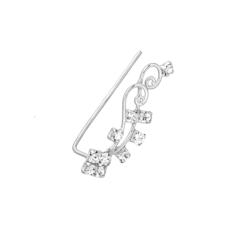
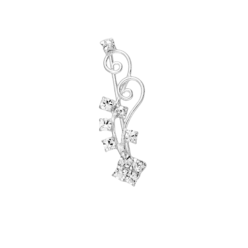
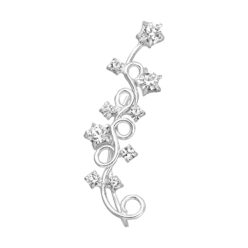
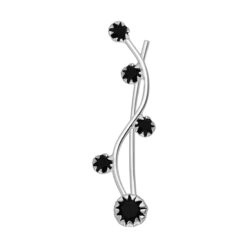
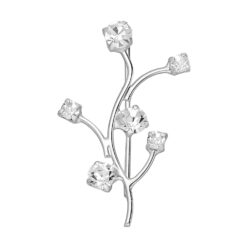
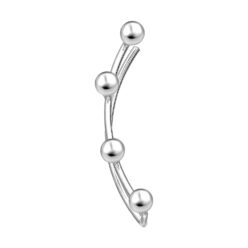
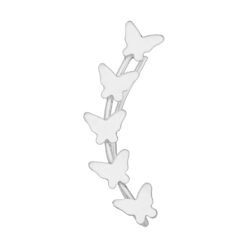
Our lovely ear climber earrings (also known as ear crawlers) are for pierced ears – they go through your ear piercing and then feature a decoration that follows the ear upwards. We have a growing selection in stock so do keep an eye on us and check back for more designs! All ear climber earrings are sold individually as default – however, if we have available stock, you can now add a pair to your basket.
£5.25Select options
This product has multiple variants. The options may be chosen on the product page
About ear climbers
Ear climbers are a great addition to your earring collection. If you only have a single lobe piercing, they allow you to create the appearance of a more complex or multiple piercing - without going for the real thing. If you already have multiple piercings, they offer endless opportunities to design a unique ear stack.
What are ear climbers?
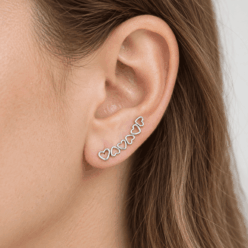
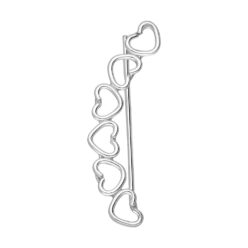
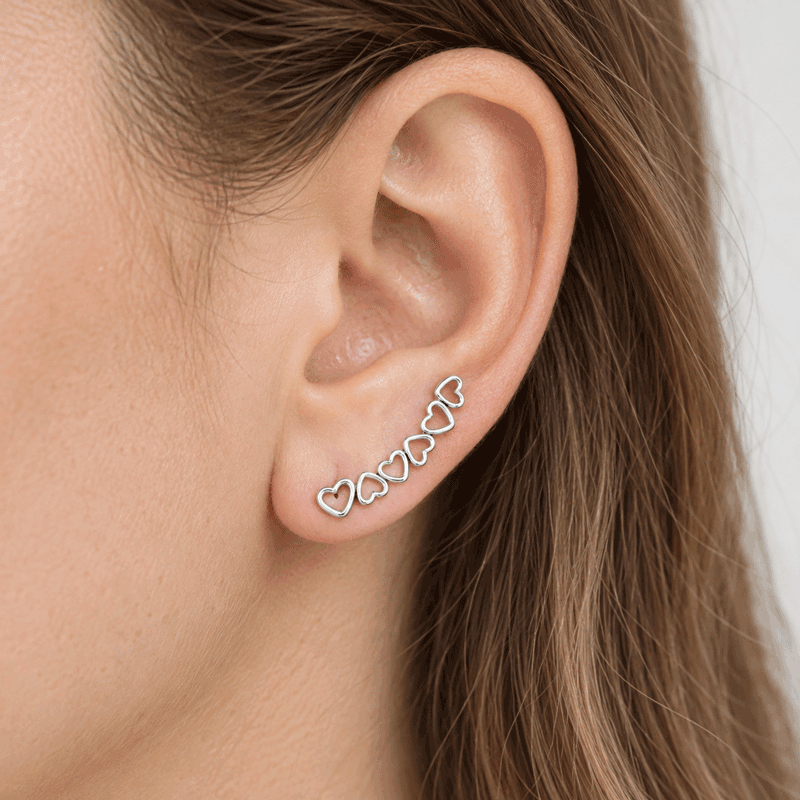
Above: Sterling silver heart ear climber
Sometimes called ear pins or ear crawlers, ear climbers feature a decorative element that sits at the front of your ear, following the curve of the ear upwards - and a curved post that sits behind the ear, holding the earring in place.
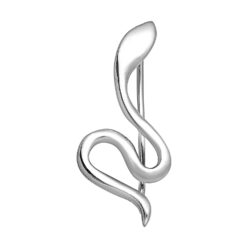
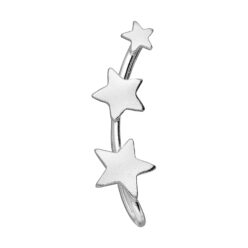
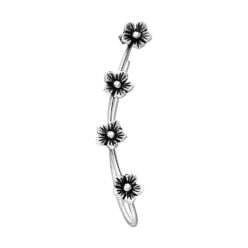
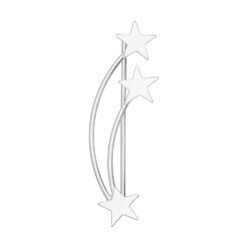
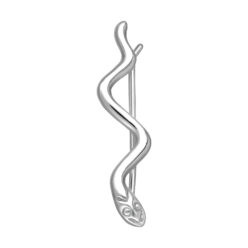
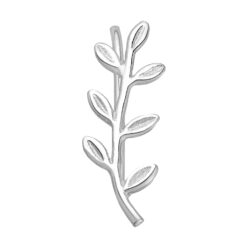
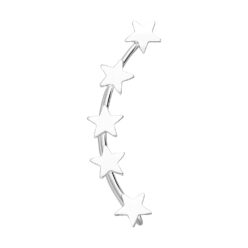
Rather than hanging below the lobe, the design draws the eye upwards. Some are barely longer than a stud; others trace a much more noticeable line along the ear. Our collection includes delicate stars, hearts and flowers as well as snakes, branches and sparkling crystal designs, all in 925 sterling silver.
How do I put in ear climbers?
Simply thread the post of the ear climber through your piercing until it is all the way through. Then simply turn the ear climber so the front (design part) is resting on your ear.
The decoration should follow the natural line of your ear, with the curved wire sitting behind it. The fit should be gentle rather than tight. If you are trying ear climbers for the first time, use a mirror to position the design and take a moment to check how it feels.
Ear climbers once inserted should sit comfortably in place all day. The back wire should gently press against the ear, holding the earring in place. If the earring moves around, remove it from your ear and push the back wire a little closer to the front decoration, so that there is less space. The idea is that the back wire creates the grip, so if it is too loose, the ear climber may slip and fall out of position.
Make very small adjustments, and only when the earring is out of your ear. The wire should support the design without pinching. If it feels uncomfortable, do not force it into position.
Choosing the right ear climber
Left or right ear climbers
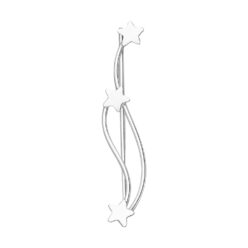
Many ear climber designs are directional: the left and right versions curve in opposite directions so that each follows the outline of the correct ear. This is especially noticeable with shapes such as snakes, branches and rows of stars.
We now mark our ear climbers as left or right where this applies, so you can choose the side you want on the product page. Our climbers are sold individually by default. Where both sides are in stock, you can also use the add a pair option to buy a matching left-and-right set. If you are buying a single climber as a gift, it is worth checking which ear the recipient intends to wear it in.
Small ears, larger lobes and the length of the design
The same ear climber can look quite different from one person to another. A shorter design may sit neatly along the lower lobe, while a longer one may reach towards the upper edge of the ear. Your piercing position matters too: a low lobe piercing leaves more room for the design to travel upwards than one placed higher up.
Look at the measurements and model photographs on individual listings rather than judging the size from a product photo alone. For example, our three-star ear climber measures approximately 32mm long and 5mm across, giving it a slender, extended shape. If you have small lobes or prefer a subtle look, you might favour a shorter design; if you want your jewellery to be more noticeable, a longer climber can be lovely.
How to style ear climber earrings
One of the nicest things about ear climbers is that you do not have to wear two matching earrings. A single climber makes a feature of one ear, especially with a tiny silver stud or one of our threader earrings on the other side. You can also wear a matching pair for a more symmetrical look.
For an ear stack, try a climber in your first lobe piercing with a small stud above it, provided the two pieces have enough room to sit comfortably. If you have only one piercing, a climber creates a layered look all on its own. Stars and crystals look particularly pretty with other delicate silver pieces, while a snake or branch design has enough character to stand alone.
Ear climbers are especially easy to show off with short hair, hair tucked behind the ears or an updo, because you can see the whole upward curve of the design. For more ideas on mixing different earrings, see our guide to creating an ear stack.
A brief history of ear climbers
Ear climbers can look very contemporary, but the idea of decorating the outline of the ear is much older. Elaborate ear ornaments are found in ancient Greek jewellery, while centuries-old Indian and Thai traditions include decorative pieces with floral, leaf and bird motifs. These are not quite the same as the pierced ear climbers sold today, but they show how long jewellery designers have been interested in shapes that follow or frame the ear. One account of ear cuff history even alleges that examples dating to around 4300 BC were found in Cumbria. That early date has not been independently verified, so it should be treated as a claim rather than an established archaeological fact.
In the 1950s, earrings that swept upwards along the ear were fashionable under the name contour earrings. Some were dramatic costume-jewellery pieces covered in glittering rhinestones, sometimes framing much of the ear. Unlike our modern pierced designs, many vintage contour earrings had clip-on fittings. Vintage jewellery specialist The Jewelry Stylist has documented the style, and Rapaport also notes its popularity in the 1960s. So, although the modern name feels new, the silhouette has been around for generations.
The modern revival was already taking shape in 2007, when Copenhagen jewellery designer Sophie Bille Brahe created her diamond Croissant de Lune ear climber. In a later interview with National Jeweler, she recalled trying two large diamond studs, deciding that the effect was too “Beckham-like”, and looking for a more original way to wear diamonds. She was also drawn to wearing one distinctive earring and something different in the other ear – a styling idea that feels perfectly at home today.
By 2013 and 2014, ear climbers were appearing regularly on the red carpet. Rodarte’s Spring 2013 runway show was also noted by jewellery writers as a possible influence on the trend. Designer Jack Vartanian's styles were worn by Jessica Alba, Halle Berry, Christina Hendricks and Anna Kendrick, while Emma Watson became another familiar face associated with the look, as Gem Obsessed reported in 2014. The style has continued to evolve alongside the fashion for individual earrings and curated ear stacks. As jewellery trade magazine JCK observed, the ear climber never really went away.
Other names for ear climbers
You may also come across ear crawlers, ear pins, ear vines, ear wings and up-the-ear earrings. Vintage examples are sometimes called contour earrings. The names are used a little differently by different designers, but they all describe the same general idea: jewellery that travels upwards from the earlobe rather than simply hanging below it.
Frequently asked questions about ear climbers
Do you need more than one piercing to wear ear climbers?
No. Most ear climbers, including ours, are designed to be worn through a single, fully healed lobe piercing. The design gives the impression of several earrings without needing additional holes.
Can I wear an ear climber in my second lobe piercing?
Yes, provided there is enough space above the piercing for the climber to follow the ear comfortably. It will sit higher than it would in your first lobe piercing, so a shorter design may work better depending on the shape of your ear. You do not need a cartilage piercing to wear a standard lobe ear climber.
Can I wear just one ear climber?
Absolutely. A single ear climber looks lovely with a simple stud, small hoop or threader on the other ear, or even on its own. Our ear climbers are sold individually, with the option to add a matching pair when both sides are available.
Are ear climbers comfortable?
They should be comfortable when they are correctly positioned, with the back wire resting gently against the ear. They should not dig in, pull at the piercing or need to be squeezed tightly to stay in place. Every ear is slightly different, so fit can vary between designs.
Can I sleep or shower in ear climbers?
We recommend taking them out before bed, showering or swimming. Removing them reduces the chance of the design catching on hair or bedding and helps protect the finish, particularly on styles with stones or decorative details.
How do I clean 925 sterling silver ear climbers?
Sterling silver can tarnish naturally over time. Gently polish your climbers with a soft silver-cleaning cloth, keep them dry and store them in a sealed bag or jewellery box when not in use. Take extra care with crystal-set designs. You can read more in our guide to cleaning silver jewellery.
Are ear climbers a good gift?
Yes, especially for someone who enjoys unusual silver earrings or likes mixing and matching their jewellery. If you are choosing just one, remember to select the correct left or right version where applicable. If you would rather give a matching set, look for the option to add a pair on the product page.