When you admire a piece of jewellery, the way the gemstone is held in place – the setting – plays a huge role in its overall look and durability. Jewellery stone settings refer to how a gemstone is mounted or secured by metal, and it significantly influences the piece’s style and wearability. From classic engagement rings to everyday earrings, different setting types offer unique aesthetics and practical advantages.
Prong (claw) stone settings
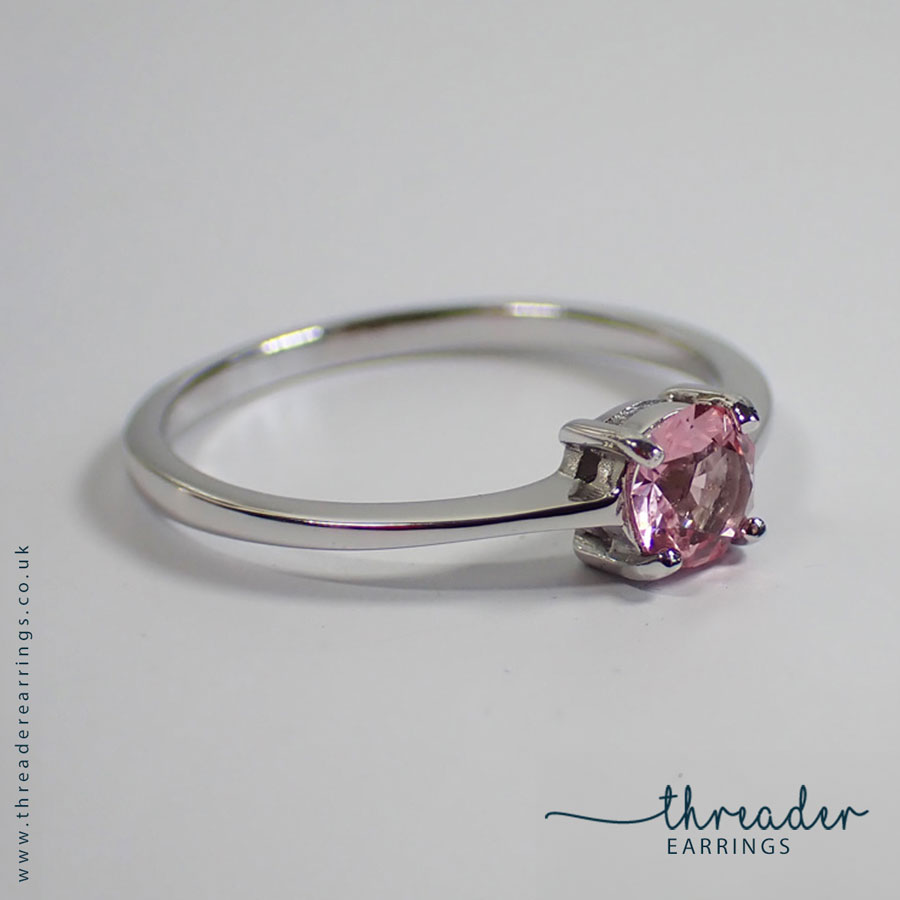
What it looks like:
The prong setting is the iconic style you likely picture on a classic engagement ring. Imagine a gemstone held aloft by three to six small metal claws (prongs) gripping it snugly at the sides. These prongs act like tiny brackets, holding the stone at its girdle (edge) while exposing most of its surface. This open design means you see a lot of the gem – light can enter from almost all angles, making the stone appear brilliant and fiery. Prong settings can vary (for example, round prongs, flat tab prongs, V-shaped prongs for pointed gems, etc.), but their purpose is the same: to securely cradle the gem while showing it off. Visually, a well-set prong looks like delicate talons or claws hugging the gem’s crown.
Pros of a prong setting:
Maximum sparkle: Prong settings allow maximum light to hit the gemstone, enhancing its brilliance and fire. With minimal metal covering the stone, prong-set diamonds or gems tend to look very bright and lively.
Classic & timeless: This setting has a timeless appeal. It’s the most common style for solitaire engagement rings, prized for its elegant simplicity that puts the gemstone front and centre.
Versatile design: Prong settings work with many stone shapes (round, princess, oval, etc.) and in various jewellery pieces beyond rings – you’ll see claw-set stud earrings and pendant necklaces where a single gem is held by prongs.
Cons of a prong setting:
Snag isk: Those little claws can sometimes catch on clothing, hair, or fabrics (especially if they sit high). Prongs protrude slightly to hold the gem, so they aren’t perfectly flush with the jewellery’s surface. This means a prong-set ring can snag on a sweater or scratch if you’re not careful.
Maintenance required: Over time, prongs can loosen or wear down. If a prong bends or breaks, the gemstone can be at risk of falling out. To be safe, prong-set jewellery should be periodically checked by a jeweller to ensure the claws remain tight and secure.
Less protection: The flip side of exposing the stone for sparkle is that the gem’s edges are more vulnerable. A prong setting offers less physical protection to the gemstone’s girdle and corners. A hard knock to a prong-set ring could chip a delicate stone or even dislodge it if a prong gives way.
Durability:
Prong settings are reasonably durable for daily wear, but they do require some care. The prongs themselves are small pieces of metal that can wear with time. For precious stones like diamonds, gold or platinum prongs generally hold up well, but you should have them inspected every so often. As long as the prongs are kept in good shape (and there are usually 4 or 6 of them for backup), the stone is secure. Avoid doing rough work (gardening, heavy lifting) with a prong-set ring on, or use gloves to prevent accidental snags.
Ideal for:
Prong settings are ideal for engagement rings and any jewellery where you want the gemstone to be the star of the show. They’re perfect for showcasing a single, high-value stone (like a diamond solitaire) because they maximise its visibility and sparkle. You’ll also find prong or claw settings in stud earrings and pendants, where a classic, elegant look is desired. If you love a traditional, glistening diamond look and don’t mind a bit of occasional maintenance, prong settings are an excellent choice. For very active everyday wear, you might consider a lower-profile setting (like a bezel) to avoid snags, but many people happily wear prong-set rings daily with proper care.
Bezel (rub-over) stone settings

What it looks like:
A bezel setting encircles the gemstone with a continuous metal rim, rather like a protective frame all around the gem. Picture a gemstone sitting flush inside a metal collar – the metal wraps up over the edge of the stone, holding it in place. This creates a smooth, streamlined look. Only the top face (the “table”) of the stone is visible, while the sides are hugged by metal. Bezels can be full (complete circle of metal) or partial (open sections, sometimes called half-bezels), but either way the stone appears neatly outlined by the setting. This style has a modern, clean aesthetic and is also very practical – nothing sticks out sharply, so it’s smooth to the touch.
Pros of a bezel setting:
Very secure & protective: A bezel is one of the most secure settings. The metal rim fully holds the stone’s edges, so the gem is less likely to come loose or get chipped. Bezel-set stones are held more securely than prongs and can withstand more bumps and daily activity. The setting even covers a thin border of the gemstone, which can hide small edge chips or inclusions, effectively protecting and disguising minor flaws. This makes it great for softer or fragile gemstones that need extra protection (e.g. opal, emerald).
No snags, low profile: Because the stone does not protrude much (the top is flush or only slightly raised above the surrounding metal), bezel settings won’t catch on clothing or scratch things. They have a low, smooth profile – ideal if you wear gloves or lead an active lifestyle.
Contemporary look: Bezels offer a sleek, contemporary appearance. The continuous metal rim gives a ring a modern elegance, and it can make a gemstone look larger by outlining it. A thin bezel around a diamond, for example, can visually enlarge the stone’s diameter, creating a bigger look for a given carat weight.
Cons of a bezel setting:
Less sparkle: Because metal surrounds the gem, less light enters from the sides. A bezel-set diamond may appear a bit less sparkly or fiery compared to a prong-set diamond of the same size. The bezel can slightly reduce a gemstone’s brilliance since light is mostly only entering from the top. If maximum scintillation is your priority, this is a trade-off to consider.
Covers part of the stone: The metal rim overlaps the edges of the gemstone, which means you see slightly less of the stone’s surface. For those who want every millimetre of their diamond visible, a bezel might feel like it’s “hiding” part of the gem. Similarly, bezels can make a diamond or gem look a tad smaller from the top view, since the actual edges are concealed.
Customisation & cost: A bezel must be custom-fitted to each stone’s exact dimensions, which can make it a bit more expensive than a simple prong setting. Crafting the bezel requires skill to ensure it’s snug. Also, if you ever needed to reset the stone or change it, it can be more work to remove a stone from a bezel compared to unbending prongs.
Durability:
Bezel settings are highly durable. They are often recommended for people with active lifestyles or for jewellery that takes a lot of wear (like rings worn every day). The metal rim shields the gem’s edges completely, so it’s rare to chip a bezel-set stone. There are no prongs that could wear out or break; the stone is held by a continuous ring of metal. Over years of heavy use, a bezel might get slight dents or the stone could shift if the bezel is struck very hard, but generally this is one of the longest-lasting settings with minimal maintenance. It’s a great choice for longevity.
Ideal for:
Bezel settings are ideal for engagement rings or rings for people who use their hands a lot (e.g. those in healthcare, sports, or manual work) since the stone is so secure. They’re also popular in men’s rings and wedding bands for a sleek, low-profile look. Many earrings and pendants use bezel settings to keep the design minimalistic and the gemstone safe (e.g. diamond stud earrings in a bezel are less likely to scratch the wearer or get knocked). If you prefer a modern style and want peace of mind about your stone’s security, a bezel (or rub-over) setting is an excellent choice for everyday jewellery.
Channel stone settings

What it looks like:
In a channel setting, a row of stones is set flush within a groove or channel carved into the metal. Think of it as a little gemstone highway: the band of the ring has two parallel metal walls, and the stones sit snugly between them in a line, touching edge to edge. No prongs are used; instead, the metal edges of the channel are often slightly raised or bent over the stones to secure them. From the top, channel-set stones form an uninterrupted row of sparkle, and they appear almost as if they’re floating in a slot of the band. This style is very popular for wedding rings and eternity bands where numerous diamonds or gems are set around the ring in a continuous line.
Pros of a channel setting:
Smooth and Secure: The stones in a channel setting sit flush with the band, so the result is smooth with no snagging points. Because the gems are sunk into the metal channel, they’re well protected from sides and won’t easily catch on fabrics. It’s a sturdy setting that holds stones securely on two sides. This makes channel-set rings quite suitable for an active lifestyle – they can take a bit of daily knocking about without losing stones easily.
Multiple stones & sparkle: Channel settings are a great way to add lots of sparkle along a ring’s band (or a bracelet’s length) in a clean, organized way. You can set a series of diamonds or coloured gems to create a glittering stripe. The look is sleek and modern, and it complements solitaire stones well (e.g. a channel-set diamond wedding band paired with a prong-set engagement ring).
Protects stone edges: This method offers good protection for the stones’ edges. The metal walls on either side safeguard the gemstones from direct side impacts. For example, small diamond accents in a channel are less likely to pop out or chip than if they were exposed on all sides. The stones are a bit recessed in the metal, adding to their security.
Cons of a channel setting:
Resizing challenges: Rings with channel-set stones can be difficult to resize. Because the stones often run along a continuous section of the band, adjusting the ring’s size might disrupt the channel or loosen the stones. If a channel-set ring needs resizing, a skilled jeweller must carefully work around the stones, and in some cases only very minor size adjustments are possible without remaking the ring.
Cleaning and maintenance: Dirt and debris can accumulate in the tiny gaps between stones in the channel over time. The channel is like a groove that can trap lotions, dust, etc. Regular cleaning (soaking and gentle brushing, or professional ultrasonic cleaning) is needed to keep it looking bright. While the top surface is smooth, the internal edges between stones are small crevices. Also, if a stone does come loose (rare but possible if hit hard), repairs can be a bit complex – the jeweller must reset it and tighten the channel, which is skilled work.
Light exposure: The channel setting holds stones by their sides, and usually there is a solid metal base beneath them (especially in rings). This means light can only enter from the top of the stones, not from below. As a result, gemstones in a channel might exhibit slightly less brilliance than in more open settings (like prongs). They still sparkle plenty, but diamonds may not show quite as much fire because the underside is covered.
Durability:
Channel settings are quite durable, especially for small to medium-sized stones. The metal framework on both sides means the stones are well supported. This is why channel settings are often used in eternity rings and bridal bands meant for daily wear. However, one thing to watch is that if the ring suffers a strong impact, the channel walls can bend and stones might loosen. Also, if a stone falls out (due to severe knock or a manufacturing fault), it might be challenging to re-secure without slightly reworking the channel. Overall, though, a well-made channel ring will last many years of wear. Just remember not to hammer or squeeze the ring sharply, as that could deform the channel.
Ideal for:
Channel settings are perfect for wedding and anniversary bands where you want a line of diamonds or gemstones across the ring. They’re also commonly used in eternity rings (stones all the way around) and tennis bracelets for a seamless row of sparkle. If you want multiple stones in a ring with a modern look (no prongs) and a fairly secure design, channel is a top choice. Many engagement rings use channel-set diamonds as side accents flanking a centre stone. Additionally, because channel-set rings are smooth, they’re ideal for someone who doesn’t want their ring catching on things – for instance, those who wear gloves for work or don’t like the feel of prongs. Just be aware of the resizing issue; it’s best to have the correct size from the start with this style.
Pavé setting
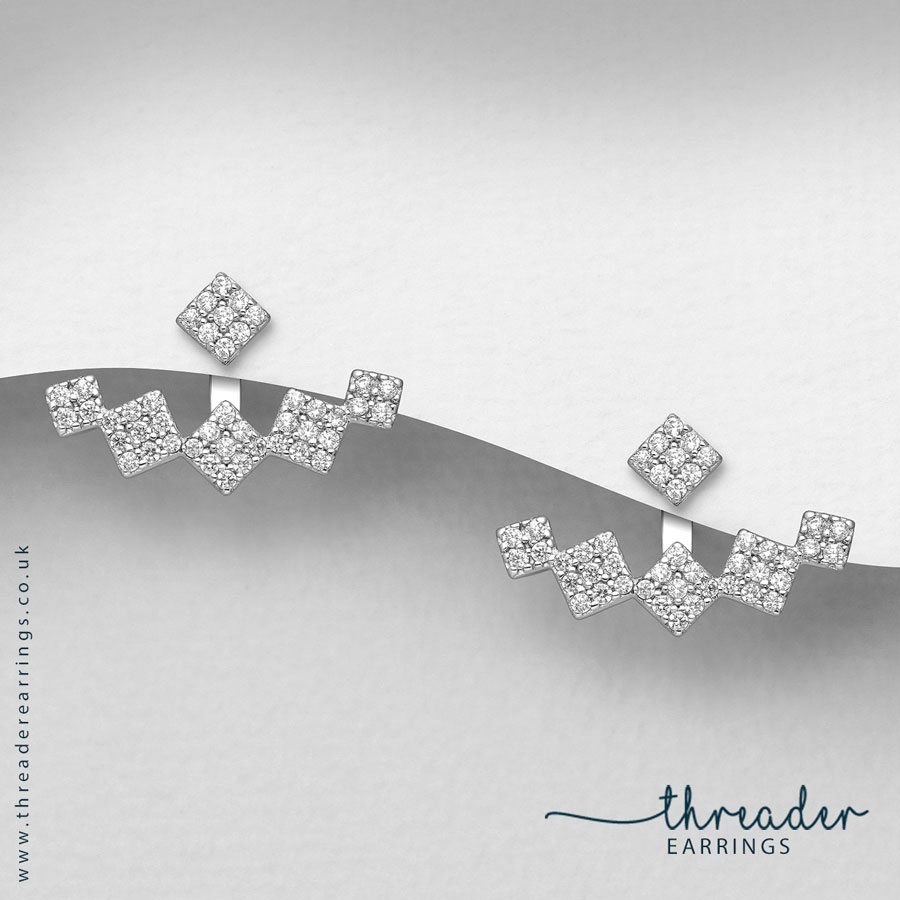
What it looks like:
Pavé (pronounced “pa-vay,” from the French word for “paved”) setting uses lots of tiny gemstones set closely together to cover a surface with sparkle – as if the jewellery has been “paved” with diamonds. Visually, imagine a cobblestone road, but each “stone” is a small diamond and the “grout” between them is tiny beads of metal. In pavé settings, the jeweller drills small holes into the metal, places the little diamonds (often 0.01–0.02 carat each) in, and then raises teeny prongs or beads from the surrounding metal to hold each stone. The result is a continuous glittery look with minimal visible metal. Pavé is often seen on ring bands (especially engagement ring shanks), around a centre stone as a halo, or even covering larger areas of jewellery for an all-over sparkle. It gives a detailed, luxurious aesthetic.
Pros of a pavé setting:
Brilliant sparkle and glamour: Pavé settings create a surface that catches the light from every angle. A pavé ring band will glitter even when the centre stone is not catching light, because dozens of tiny diamonds are doing the job. This can enhance the perceived sparkle of the entire piece and complement a larger centre gem. Pavé can even help mask a slightly imperfect centre stone – the surrounding sparkle draws the eye, so any minor flaws in the main gem are less noticeable.
Enhances design without overpowering: Small pavé stones add elegance and detail to a design without taking focus completely away from bigger stones. They work with virtually any ring style – modern or vintage – adding a touch of luxury. For example, a solitaire ring with a pavé band looks more elaborate and interesting. You can also have pavé-set halos (small diamonds around a centre stone) to make the centre look larger and more eye-catching.
Smooth feel (micro-pavé): Despite having many stones, a well-done pavé surface is fairly smooth to the touch because the diamonds are set flush or slightly sunken in the metal. The tiny prongs are barely noticeable. This means pavé bands are generally comfortable to wear; you won’t typically feel individual prongs if everything is polished properly.
Cons of a pavé setting:
Stone loss risk: With dozens of very small gems, pavé settings have many tiny prongs – and if one or two of those prongs weaken, a tiny diamond can fall out. It’s not extremely common with quality craftsmanship, but it is a known issue that pavé-set rings can shed a stone now and then. The good news is these melee diamonds (small diamonds) are usually inexpensive to replace, but you’d need a jeweller to do it. Regular inspection is wise to catch any loose stones early.
Dirt and cleaning: Pavé settings have lots of nooks and crannies. Dirt, hand lotion, soap residue – these can accumulate around the little stones and dull their sparkle. Cleaning a pavé ring can be a bit tedious; you may need to gently brush it or get professional cleanings to keep it gleaming. If not maintained, the many small gems can start to look cloudy due to trapped grime.
Not ideal for rough wear: Because pavé elements are delicate, jewellery with extensive pavé (like an all-pavé band) is not the best for very rough daily wear. The small prongs holding each tiny stone can snag slightly (though much less than big prongs) and are more prone to wear. If you do a lot of hands-on work (lifting, sports, etc.), heavy pavé on a ring might not be the most worry-free choice – you might lose a stone or bend a section of the pave under stress. Some pavé-set rings cannot be easily resized either, especially if stones go all around, as resizing could disturb the continuous stone layout.
Durability:
Pavé settings are moderately durable – fine for everyday use if treated with care, but not as bombproof as a bezel or channel setting. The small stones are secured by tiny bits of metal; these can last decades if not caught or knocked, but they are inherently smaller and can wear down faster than a big prong or bezel. Over many years, you might have to re-tip or tighten some pavé prongs. To maximise durability, it’s often advised to remove pavé rings during heavy work or sports. Many people do wear pavé engagement rings daily without issues – just be mindful and have the ring checked annually. Also, if a ring is fully pavé-set (stones all around), resizing it later may require adding or removing stones, which is tricky. As long as you stay close to your correct size and handle it with a bit of caution, a pavé setting will maintain its beauty.
Ideal for:
Pavé is ideal for those who love sparkle and detailed jewellery design. It’s hugely popular in engagement rings – for example, a halo setting is essentially a pavé circle around the centre stone, and pavé bands are common in bridal sets. It’s also used in cocktail rings, pendants, and earrings to add extra glitz. If you want your ring to flash from all angles and appreciate fine, decorative workmanship, pavé is perfect. It’s also a nice way to make a smaller centre stone look more impressive (the halo effect or a sparkly band draws attention). However, if you need a super low-maintenance ring for very active wear, you might lean towards fewer, larger stones in sturdier settings instead.
Bar stone settings
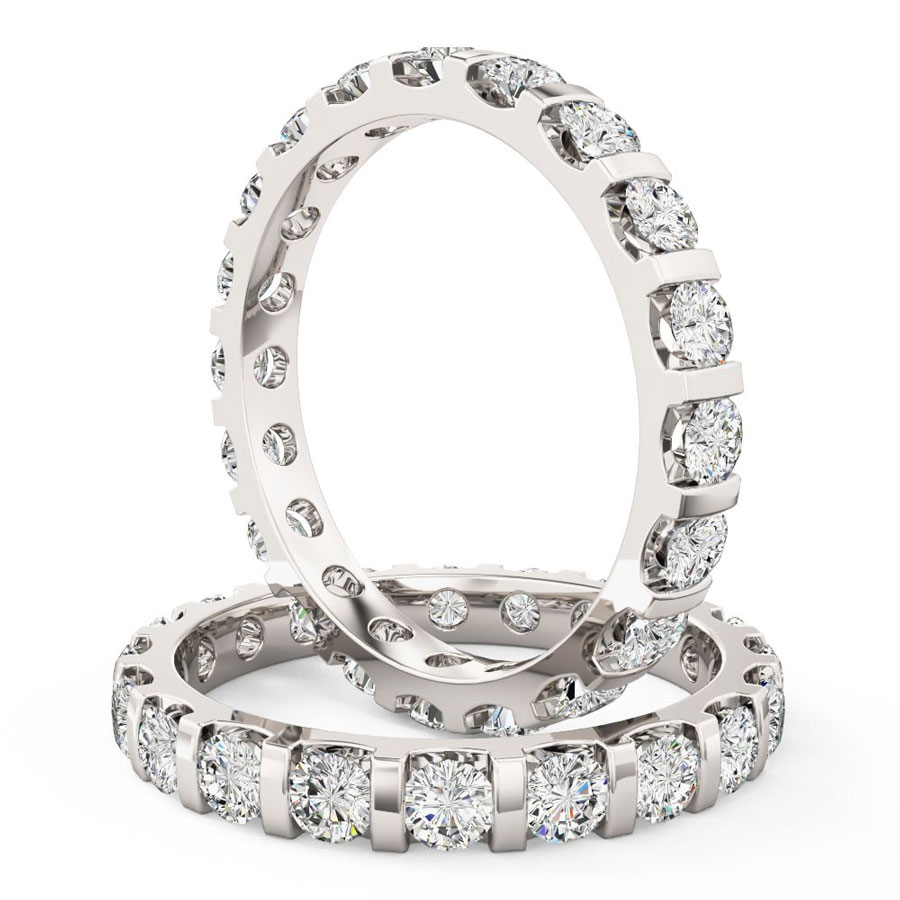
What it looks like:
A bar setting is like a cousin of the channel setting. Here, each gemstone is held in place by a thin vertical bar of metal on either side of the stone, with open space on the other two sides. Imagine a row of gems across a ring, but instead of continuous metal on both edges (as in a channel), you see metal bars between each stone and at the ends, almost like pillars holding them up. The gems are still set flush with the band’s surface on top, but their sides are partially exposed except where the bars separate them. This creates a very modern and slightly “airy” look – you can often glimpse light coming through the sides of the stones, which can enhance their brilliance. Bar settings are commonly used in anniversary or eternity bands and occasionally as accents on engagement rings.
Pros of a bar setting:
Open light, great sparkle: Because the stones are exposed on two sides (left and right, for example) with only bars on the other sides, more light can enter compared to a full channel. This extra light can make the diamonds or gems appear more fiery and brilliant from certain angles. A bar-set row of diamonds gives a bit more sparkle than the equivalent channel-set row, since there’s less metal blocking the sides.
Secure individual hold: Each stone has its own mini “frame” with the bars, which hold it snugly in place. In a well-made bar setting, the stones are quite secure because the bars are usually an extension of the ring’s metal, sturdily built. The design firmly grips stones on two sides while the other sides are recessed into the metal band.
Modern aesthetic: Bar settings look contemporary and stylish. The visible metal bars create a geometric pattern that can be very appealing. It’s a bit more distinctive than a channel – you can clearly see each stone separated by metal, which some people love for the symmetry it creates. Bar-set rings also pair well with minimalist or architectural design themes. They are less common than prong or channel settings, so they offer a touch of uniqueness while still being classic enough for everyday wear.
Cons of a bar setting:
Slightly less protective: With two sides of each stone open to the world, there’s a bit more exposure. The top and bottom (or outer sides) of each gem in a bar setting aren’t covered by metal, so if you gave it a really hard knock, there’s a slightly higher chance of chipping a stone compared to a channel or bezel setting. In normal wear this isn’t a big problem (the stones are still mostly protected by being flush in the ring and held by bars), but it’s worth noting that the edges that face outward have no metal covering.
Security vs. other settings: While bar settings are secure, they can be a tad less secure than channels or full bezels overall. If a bar were to bend or break, the stones on either side could fall out. That said, such failures are rare with quality rings. Also, like channel-set rings, bar-set rings that have stones wrapping around can be hard to resize without altering the design. Resizing might involve moving the bars or adding spacing, which can be complex.
Maintaining alignment: If a bar-set ring does take a heavy impact, one of the metal bars could shift, potentially loosening adjacent stones. You’d then need a jeweller to straighten or rebuild the bar to secure the stones again. Also, cleaning in between the stones (in the small gaps where there’s no metal wall) may require a tiny brush to get any debris out, though generally bar-set designs are relatively easy to keep clean compared to very intricate pavé.
Durability:
A bar setting is fairly durable for regular wear, nearly on par with channel settings. The vertical bars themselves are usually thick enough to hold up over time. They protect the sides of the stones that face the ring’s ends, and the stones are recessed enough that it would take a pretty direct hit on the exposed side to cause damage. Over many years, you might see slight wear on the bar edges, but they can be polished or reinforced if needed. If you plan to wear a bar-set eternity band daily, just treat it as you would any fine jewellery: avoid direct hits and perhaps remove it for heavy manual tasks. With that care, the setting will securely hold its stones for the long run.
Ideal for:
Bar settings are great for eternity rings, anniversary bands, or multi-stone rings where you want a contemporary twist. They’re also used in some three-stone engagement rings or as side accents on rings to hold baguette or round diamonds in a neat row. Because they allow more light, bar settings are nice for showcasing the colour and cut of each individual stone in a series. If you like the idea of a channel set row but want a bit more sparkle and a modern design element, a bar-set ring could be perfect. They’re also relatively comfortable and snag-free (the stones are flush), so they work well for daily rings. Just remember they’re best suited to very hard stones (diamonds, sapphires etc.) since softer gems might get more easily chipped with partly exposed sides.
Flush (gypsy) stone settings
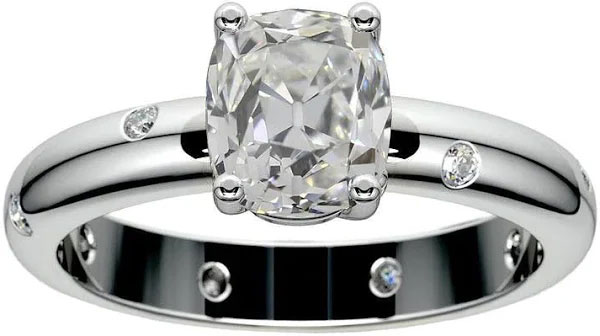
What it looks like:
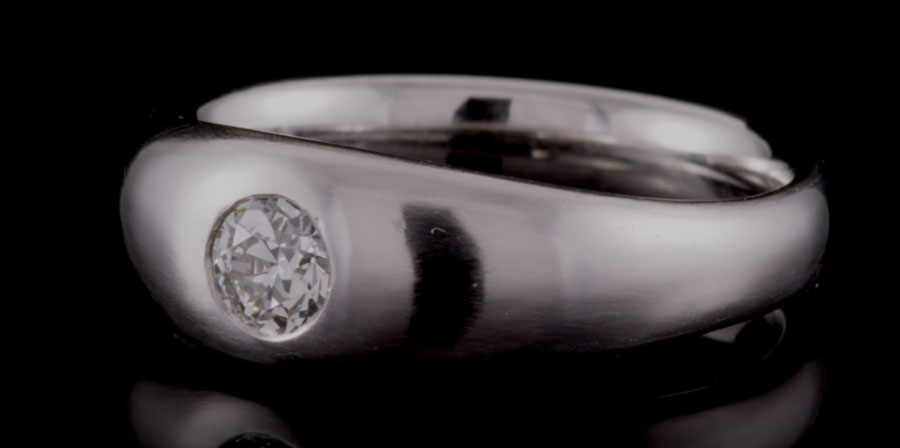
A flush setting – also known as a gypsy setting – is when a gemstone is set down into the metal so that the top of the stone is level with the metal surface around it. Essentially, the jeweller drills a hole into the jewellery piece, inserts the stone, and then burnishes or presses the metal around the stone’s rim to hold it in place. The result is extremely sleek: the stone’s table sits flush with the metal and there are no prongs or bezels sticking up. From the surface, a flush-set gem can look like a little sparkling dot on a smooth metal field, with only its top visible. This setting is often seen in men’s rings (like signet rings with a small diamond) and in designs where multiple tiny stones are scattered like stars on a surface.
Pros of a flush setting:
Ultimate snag-free design: (Assuming all the stones are flush, and there’s no solitaire like the top photo of this section) Because the stone is flush with the metal, there’s nothing to catch or snag – the ring or jewellery piece feels smooth to the touch. You could run your finger over a flush-set ring and barely tell there’s a gem except for the change in texture. This makes flush settings excellent for those who work with gloves or fabrics, or just anyone who wants a low-profile ring that won’t scratch or catch on things.
High security: A flush-set stone is very secure and well-protected. The metal surrounds the gem’s edges completely, absorbing most impacts. If you accidentally hit your ring against a surface, the metal takes the brunt of the force, not the gem. The stone can’t easily pop out because it’s literally held in by all sides of metal (much like a bezel but level with the surface). This setting keeps your diamond or gemstone safe from chipping on the edges and from falling out.
Discreet and modern look: Visually, flush settings offer a minimalist, understated aesthetic. The jewellery piece can have a clean, unbroken metal surface with surprising sparkles appearing level with the metal. It’s a popular style for men’s wedding bands (often a simple band with one or several small diamonds set flush) and for contemporary designs that favour subtlety over a big protruding stone. Flush settings let you add a bit of sparkle without a high profile – great for everyday wear.
Cons of a flush setting:
Reduced brilliance: With the stone set down in a metal hole, less light can reach it. Only the top of the gemstone is exposed, so you won’t get as much light entering from the sides or bouncing out from beneath. This means a flush-set diamond will typically exhibit less brilliance and fire than the same stone in a prong setting. The sparkle is more muted – you get a twinkle, not a blinding flash. For smaller accent stones this may not matter, but for a main stone it will be noticeable.
Stone size limitations: Flush setting is more commonly used for smaller stones (accents) or very sturdy stones. Trying to set a very large diamond flush could be impractical – it would require a very thick piece of metal to drill into. Also, the larger the stone, the more metal has to cover its edges to secure it, which can be difficult and may not look appealing. So flush settings are less often used for big centre gemstones (like a 1 carat diamond solitaire flush-set in a ring is rare, though not unheard of).
Style Consideration: The flush/gypsy style is not as “showy” or light-catching as other settings. Some may find it too understated or even think it looks like the stone is “sunken” into the ring. It’s a matter of taste – if you love a bold, raised gemstone, flush setting will not give you that look. Additionally, resizing a flush-set ring can be tricky if stones are set all around, since moving the metal can disturb how the stones sit.
Durability:
Flush settings are very durable and low-maintenance. There are no prongs to bend and no exposed girdle to worry about. The gemstone is as safe as it can be; it’s like it’s embedded in the metal. This makes flush settings fantastic for everyday rings that see a lot of wear and tear. You’ll often see hardworking professionals (chefs, engineers, etc.) with a wedding band that has a flush-set diamond for exactly this reason. Over years, the metal around the stone might get tiny dings (like any ring would), but the stone will remain protected. If the ring does take a heavy hit and the metal is dented, in very rare cases the stone could loosen, but it’s uncommon. Overall, flush settings offer one of the best longevity profiles among settings.
Ideal for:
Flush or gypsy settings are ideal for wedding bands (especially men’s styles), everyday rings, and any jewellery where practicality is paramount. They’re commonly used for setting small diamonds as decorative accents on ring shanks or bracelets (creating a starry effect) like the top example. If you want a ring you never have to worry about catching or damaging, a flush-set design is perfect. It’s also great for people who prefer a subtle sparkle – the gems will twinkle discreetly. While flush settings are less common for engagement solitaires (since many folks want the diamond to stand up and stand out), they can be used in contemporary or minimalist engagement designs like the second example. In earrings, flush settings are rare (studs typically use prongs or bezels), but in pendants or as small accent stones on a pendant’s surface, flush sets can be lovely.
Tension stone settings
What it looks like:
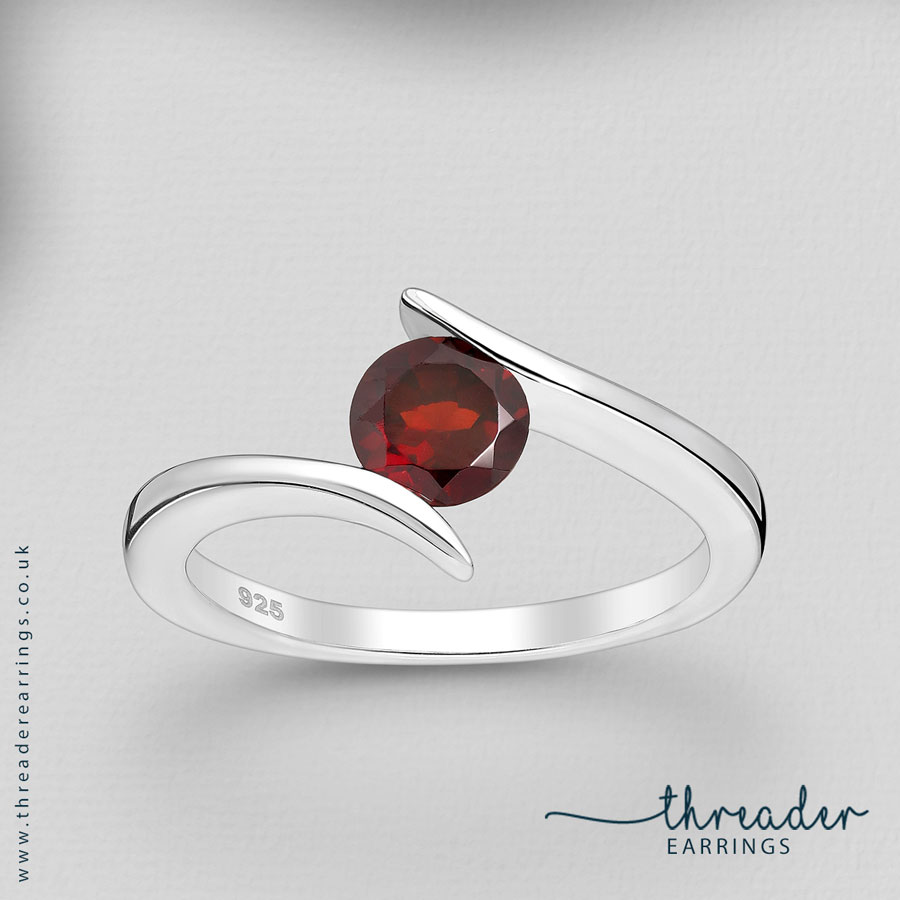
A tension setting is a head-turner because the stone looks almost magically suspended in mid-air. In a true tension setting, the gemstone is held in place entirely by the pressure of the metal band pushing against it – no prongs, no bezel, no invisible setting underneath. The ring (usually a thicker metal band) is engineered like a spring; the ends of the band are designed to clamp onto the stone’s sides. Tiny grooves are often cut into the metal where it touches the gem, to create a secure seat. Visually, there’s a gap in the ring and the gemstone bridges it, held only at two precise points. The effect is very modern and minimal – the stone is highly exposed, almost floating, with a lot of light passing through it.
Pros of a tension setting:
Unique, modern aesthetic: The tension setting provides a strikingly contemporary look. It’s not a common style you see every day, so it immediately draws interest. The open sides showcase almost the entire stone with very little metal obscuring it, creating a dramatic “floating stone” impression. Many love it for its sculptural, clean lines – it’s the opposite of a fussy, prongy design.
Lots of light and brilliance: With no metal beneath or around the stone (aside from the small contact points), a tension-set gemstone can display excellent brilliance. Light enters from nearly all angles, so a well-cut diamond in a tension setting will show off its sparkle and fire vividly. The open design is like a spotlight on the stone. Also, the ring itself is usually simple (often just a metal band with a gap), so all attention goes to the gem.
Secure (when well-made): It might seem counterintuitive, but a properly engineered tension setting is very secure for hard gemstones. High-quality tension rings are made of hardened metal exerting tremendous pressure (thousands of pounds per square inch) on the gem, so it won’t budge easily. There’s no worry about prongs wearing out. Additionally, tension settings have the benefit of a smooth profile (no prongs sticking up), making them relatively snag-free given their style. They are also easy to clean – you can access the stone from all sides with a cloth or brush, since it’s so open.
Cons of a tension setting:
Resizing and adjustment difficulties: One of the biggest drawbacks is that a true tension ring cannot be resized easily (sometimes not at all). The tension is calibrated for a specific size and for the specific stone it holds. Altering the ring’s size could ruin the precise pressure fit. If your finger size changes, the ring often must be remade from scratch by the original manufacturer or fitted with some insert. This means you need to be very sure of the size (and perhaps the ring is less future-proof if your knuckle enlarges or so on).
Not for softer stones: Tension settings are generally limited to only the hardest gemstones. Because so much pressure is applied, a softer gem (anything below about 9 on Mohs hardness) could crack under the force. In practice, that means tension rings typically hold diamonds, sapphires, rubies, or moissanite – these stones are tough enough to handle the stress. If you dreamed of a tension-set emerald or opal, that’s unfortunately not feasible (those stones are too brittle).
Risk in extreme conditions: While tension settings are secure for normal wear, there is a theoretical risk if the ring undergoes a very sharp impact or is bent. A strong enough force at the wrong angle could overcome the tension and dislodge the stone. It’s extremely rare – manufacturers design these rings to be robust – but it’s something to consider. Also, if the stone does ever loosen, not every local jeweller can repair a tension setting; it may need to go back to a specialist. Finally, because tension rings have exposed sides, the centre stone isn’t shielded much. You wouldn’t want to whack a tension-set diamond against a hard surface; the edges are exposed and could chip (again, unlikely with a diamond’s hardness, but possible with enough force).
Durability:
Tension settings are crafted from very strong metal alloys (often hardened gold, titanium, or steel) to maintain the spring tension. In terms of everyday wear, they are durable if treated properly – the metal won’t easily deform under normal use and the stone will stay put. However, one should treat a tension ring a bit more carefully than, say, a bezel-set ring. Avoid situations where the ring could be significantly bent or struck. For example, rock climbing with a tension ring or doing heavy construction work with it on is not advised. Many tension rings also have the stone set fairly high (to show it off), which can make it more prone to knocking. If longevity is a concern, ensure you buy from a reputable maker (quality is key here). Also, remember the limitation with resizing – that’s a durability factor in the sense that the ring’s life with you is tied to your finger size staying relatively stable.
Ideal for:
Tension settings are ideal for someone who wants a modern or unconventional engagement ring or statement ring that really highlights the gemstone. They’re perfect if you love the “floating diamond” look and a clean design without extra stones or frills. People who choose tension rings often don’t follow the crowd – it’s a great choice if you want something unique and artistic. It’s also a good conversation piece because of the apparent mystery of the setting. Tension-set rings are usually solitaires (one central stone); they make gorgeous engagement rings for those confident in this style. However, they might not be ideal if you need frequent resizing or if you want to use a gem other than the big four (diamond, sapphire, ruby, moissanite). For those who do go for it, a tension-set ring can be a stunning everyday ring – just treat it with a bit of TLC during very rough activities.
Halo stone settings
What it looks like:
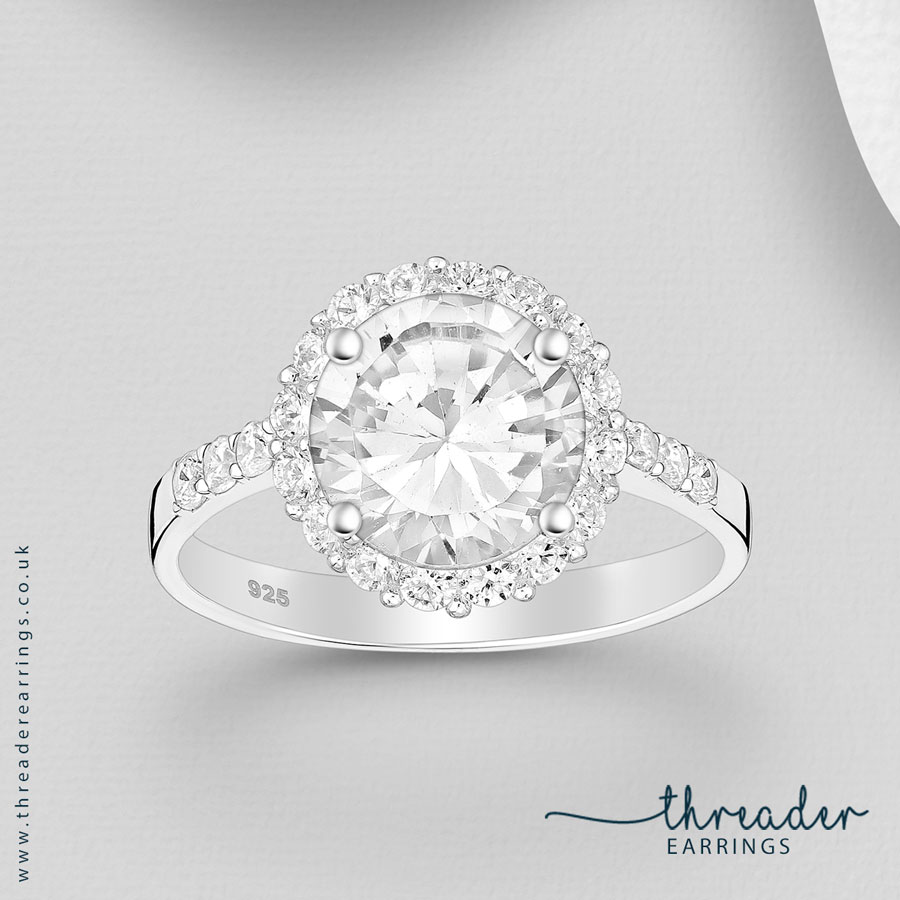
The halo setting is actually a combination of setting techniques arranged in a style: it features a central gemstone surrounded by a ring of smaller stones, forming a “halo” of sparkle around the centre. Typically, the centre stone is held with prongs or a bezel, and the tiny halo stones are pavé-set or micro-prong-set in a circle around it. From the top view, you see one big glittering circle – the outline of the halo makes the centre gem look larger and adds extra brilliance. Halos can be single (one ring of small stones) or double/triple for even more effect. Commonly, diamonds form the halo around a diamond or coloured gem centre. Visually, a halo gives a piece a vintage-inspired glamour (hearkening back to Art Deco designs) but it’s also very contemporary because it’s been a huge trend in the last decade.
Pros of a halo setting:
Makes the centre stone appear larger: One of the main reasons halos are beloved is that they significantly boost the visual impact of the centre gem. The halo stones act like an outline, extending the diameter of the sparkle. A modest diamond can look up to half a carat bigger just by the halo effect. In other words, you get a big look without paying for one huge stone. This is great for those who want maximum presence.
Extra sparkle: With many small diamonds encircling the centre, a halo ring is extremely sparkly. The halo catches light from all around the centre stone and often reflects light into the centre as well, enhancing its shine. Essentially, you have not just one gem but a whole cluster working together. For sparkle enthusiasts, halos deliver a wow factor.
Versatile style: Halos can complement many shapes of centre stone (round, oval, cushion, pear – usually the halo is made to match the outline). They also allow for creative combinations: for instance, a coloured gemstone like sapphire or morganite in the middle with a diamond halo around it for contrast. Halos can give a ring a touch of vintage elegance or modern bling depending on design. They’ve been popular for years (think of royal engagement rings, celebrity rings, etc.), so although trendy, they’ve proven to have lasting appeal.
Cons of a halo setting:
More maintenance (many small stones): A halo setting incorporates many tiny gems (like mini pavé). Just as with any pavé work, there’s the possibility of those little stones coming loose over time or getting dirty. You’ll need to maintain it – checking for loose stones and having it cleaned so the halo shines its best. Losing a halo stone isn’t usually catastrophic (they’re small and replaceable), but it’s something to watch for, especially if the ring sees daily wear.
Popularity and trends: The halo design has been extremely popular for a while, which means it’s less “unique” – you’ll see many halo rings out there. Some worry that it might look dated if fashions change (it’s been the trend for several years). However, halos are also quite classic in their own right (they existed in antique jewellery), so it depends on personal perspective. If you love it, it’s always in style for you!
Can dominate small centre stones: If the centre stone is very small, a halo can sometimes overpower it or make it appear like just part of the cluster. The centre gem should ideally still stand out; usually, a halo is recommended when the centre stone is of a decent size so it doesn’t get “lost” among the melee stones. Also, a very large halo might make a ring too wide to sit comfortably with other rings (like a wedding band) if not designed carefully.
Durability:
In terms of structure, a halo ring is as durable as the sum of its parts. The centre stone is typically set in a traditional way (prongs or bezel), so that part’s durability depends on that setting style. The halo stones are tiny and set with prongs/beads, so similar notes as the pavé setting apply: they are secure but could be vulnerable if struck hard or not maintained. Overall, halo rings are made for everyday wear (tons of engagement rings have halos), and they hold up well if you’re mindful. It’s a good idea to have the halo inspected every so often to ensure all those mini gems are tight. If a ring with a halo is knocked badly on a hard surface, you may have one of the little diamonds come out or get a prong bent – but a jeweller can fix that. As with any multi-stone piece, avoid doing heavy labour while wearing it continuously. With normal care, a halo will sparkle for a lifetime.
Ideal for:
Halo settings are ideal for engagement rings for those who crave extra sparkle and a larger appearance of the centre stone. They’re also popular in stud earrings (a central stone with a diamond halo makes the earring look bigger and more brilliant) and pendants. If you love a glamorous, glittering look and want your central gem to really “pop,” a halo is perfect. It’s a great choice if you have a gemstone of sentimental value that’s a bit smaller – you can give it more emphasis with a halo around it. People who are drawn to vintage or art-deco designs also appreciate halos (like the classic sapphire halo Princess Diana/Kate Middleton ring). Keep in mind the small extra upkeep, but if sparkle-per-dollar is your goal, halos are hard to beat!
Cluster stone settings
What it looks like:
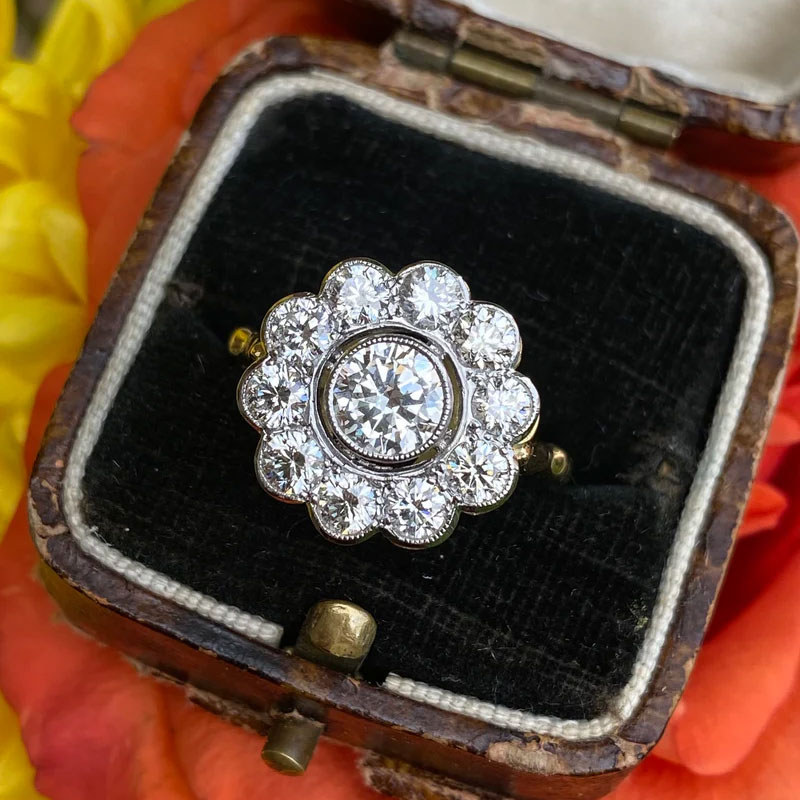
A cluster setting groups multiple stones together to create a cluster or bouquet of gems, often giving the appearance of one larger gemstone or an elaborate shape. In a cluster ring, there might be one slightly larger centre stone with smaller stones arranged around it (forming something like a flower shape), or no single centre – just many stones of equal or varying sizes composing a design. The stones can be held by small prongs or beads, but they’re set very closely in a group. From a short distance, a cluster of smaller diamonds can even look like one big diamond because they flash together. Cluster settings were very popular in antique and vintage jewellery (e.g. Victorian era cluster rings) and remain a charming choice. They can be ornate or simple depending on how the stones are arranged.
Pros of a cluster setting:
Cost-effective brilliance: Clusters are a clever way to get a big, impressive look without needing a single large, expensive gemstone. By using multiple smaller stones, a cluster can achieve a lot of surface area and sparkle for a lower cost. It’s ideal if you want a ring that looks large and flashy without the price of a huge solitaire. In terms of carat weight, smaller diamonds are much less costly per carat than a single large diamond, so clusters give bang for your buck in size and shimmer.
Unique and creative designs: Cluster settings offer a lot of design creativity. Jewellers can mix stone shapes (round, pear, marquise, etc.) and even colours to form floral patterns, starbursts, or abstract arrangements. Each cluster ring can have a unique character – from classic daisy clusters to modern geometric groupings. This means a cluster piece often has a distinctive, individual look rather than the more standardised solitaire or halo styles.
Lots of sparkle: With many stones, you get many facets catching light. A well-crafted cluster will sparkle almost like a disco ball because each small gem is reflecting light. There’s also depth to the look – some stones might be set a bit higher or lower, creating a textured sparkle. For lovers of brilliance, clusters can be very satisfying. They also can make coloured gemstones stand out, for example a cluster of sapphires and diamonds gives a lovely contrast.
Cons of a cluster setting:
Cleaning and maintenance: More stones means more tiny gaps and crevices. Like pavé and halo settings, clusters can accumulate dirt around each gem, so regular cleaning is needed to keep the sparkle. Maintenance-wise, there are also more prongs or settings that could potentially loosen – meaning a slightly higher chance you might lose a small stone if something goes wrong (though not common with good upkeep). As clusters often cover a broader area, you have to be careful that none of the outer stones’ settings get caught or bent. It’s not high maintenance, but definitely more than a simple one-stone ring.
Stones competing for attention: In a cluster without a clear centre stone, none of the stones individually stand out as a focal point. If you specifically want to showcase a single gemstone (like a cherished diamond), a cluster might dilute that effect. Even with a central stone, the surrounding stones draw the eye too. Some people love this abundance of sparkle; others might feel it’s “too much going on” or prefer a solitaire where one gem is the star.
Vintage vibe (pro or con?): Clusters often have a vintage or antique feel (which can be wonderful if you like it). However, if you’re aiming for a very modern or minimalist style, a cluster might not fit that aesthetic. Traditional cluster designs can look old-fashioned to some. There are modern cluster designs too, but it’s something to consider in terms of personal style. Also, cluster rings can sometimes be a bit bulky or cover more of the finger, which might not be as comfortable for everyone for daily wear.
Durability:
The durability of a cluster setting depends on how it’s constructed. Usually, each stone in a cluster is held by its own tiny prongs or shared prongs with a neighbour. If well-made, a cluster ring can be quite sturdy – many antique cluster rings have survived generations. Still, given the number of stones, you want to ensure none of the prongs or settings get bent. If one small stone falls out, the ring can usually still be worn (no structural collapse, it’ll just have a gap in sparkle until fixed). Outer stones in a cluster could be more exposed to knocks than a single centre stone would be, simply because the design spreads out. It’s a good practice to occasionally check that all stones are snug. Most cluster rings are fine for regular wear, but perhaps avoid heavy-duty tasks with it on, just as a precaution. If it’s a large cluster (covering from knuckle to knuckle, for instance), you’d definitely remove it for anything strenuous to prevent bending any part of it.
Ideal for:
Cluster settings are perfect for those who love vintage or artistic jewellery and want a lot of sparkle for their budget. They make for beautiful anniversary or cocktail rings, often featuring multiple diamonds or a mix of gemstones. Clusters are also a popular choice for heirloom or estate-style pieces – if you like the look of Grandma’s ring, it might be a cluster. For engagement rings, clusters are less traditional today but can be a lovely choice for a unique, non-mainstream ring (for example, a cluster of small diamonds instead of one big one, or a cluster forming a flower with a tiny ruby in center). Cluster earrings (multiple small gems grouped, like a flower on each earlobe) are also quite common and give a nice presence on the ear. Essentially, choose a cluster if you appreciate creativity in design and lots of glitter, and you don’t mind the slightly higher maintenance of multiple stones.
Illusion stone settings
What it looks like:
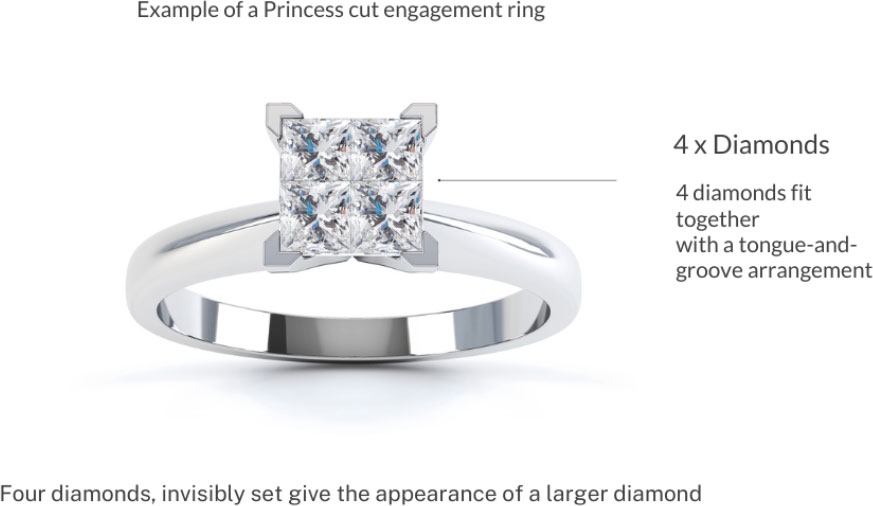
The illusion setting is a clever and intriguing technique where gemstones (often square-cuts like princess or baguettes) are set side by side. The stones appear to be neatly tiled together in a seamless surface, as if they’re magically staying in place with nothing securing them. In reality, the stones have thin grooves cut on their sides or bottom and are slot-mounted onto a hidden metal framework or rails beneath. From the wearer’s view, you just see a continuous expanse of gemstones with no prongs or bezels interrupting the view. This setting is often used to create the illusion of a larger gemstone – for instance, a cluster of illusion-set princess diamonds can look like one big diamond to the casual glance.
Another example of an illusion setting is where the gem is surrounded by a ring of angled metal. This style was popular during the Art Deco period.
Don’t confuse the illusion setting with the invisible setting (another name for a tension-set stone, see above).
Pros of an illusion setting:
Smooth surface: Since no prongs stick out, invisible-set jewelry often has a very smooth, snag-free surface (at least on top). It’s comfortable to wear and won’t easily catch on clothing from the top side (the underside will have the metal framework, but that’s usually enclosed in the piece). The design is clean and modern, yet it’s been popular since the 19th century for achieving certain looks.
Impressive illusion: Invisible settings are often used to create the illusion of one big gemstone made up of many small ones. For example, you might see a “princess-cut diamond” look in a ring, but it’s actually a set of four smaller princess diamonds invisible-set into a square with no seams, like the above photo. This can be a cost-effective way to mimic larger stones, and it also allows for fancy designs like checkerboard patterns or channel-like rows of gems with no metal in between.
Cons of an illusion setting.
Repair difficulty: Illusion settings are notoriously difficult to repair or adjust. If one stone comes loose or chips, fixing it isn’t as simple as tightening a prong. The entire framework might need to be disassembled by an expert. Not all jewellers will even attempt repairs on an illusion setting because it’s so specialised. This also means if you lose a stone, it must be replaced with one of exactly the right dimensions to fit the puzzle. Repairs can be costly.
Less secure over time: While initially the stones are held securely in the metal grid, illusion settings tend to be less secure than traditional settings in the long run. The underlying metal framework can weaken with wear, or if the piece is bent at all, stones may pop out. Because there are no prongs holding down the top, if a stone’s groove slips off its track or the track warps, the gem is gone. For this reason, illusion-set jewellery is best worn occasionally or with care, rather than, say, a heavy-duty daily ring.
Stone limitations: Illusion setting works best with certain stone shapes and very precise cutting. Typically, you see it with squares or rectangles (princess, emerald cuts) or occasionally rounds set into a squarish grid. It’s not something that can be done with any shape or any size; the stones must be very well matched in size for the illusion to work. Also, the stones usually need to be quite clean (high clarity) because inclusions can cause breakage when grooving the stone or under pressure. All this means illusion-set pieces are somewhat limited in design (mostly geometric layouts) and might be restricted to diamonds or very hardy gems, since the stones are under slight tension in the mount.
Durability:
Illusion settings are moderately fragile compared to other settings. They are safe to wear, but you definitely wouldn’t want to subject an invisible-set ring to a lot of hard knocks. The technique inherently removes a bit of the structural support (no overlapping prongs or bezel rims). If a piece is invisibly set with many stones, consider it dress or occasion jewellery rather than something you’ll never take off. Over time, slight movements can loosen stones. The metal rails that hold the grooves can also wear. In summary, the durability is not the strong suit of this setting – it’s a trade-off for the look. If you own an invisible-set item, it’s wise to regularly inspect it for any shifted or rattling stones and avoid wearing it during strenuous activities. Some modern advancements have improved the security (like combining invisible setting with underneath supports), but it’s still one to be careful with.
Ideal for: Illusion settings are ideal for statement pieces where the wow-factor of an all-gemstone surface is desired. They’re often seen in cocktail rings, earrings, and pendants that are meant to impress. For instance, a pendant with an illusion-set cluster of diamonds can look like one large diamond from afar. It’s also used by some high-end jewellery designers to achieve unique patterns (like floral shapes or designer logos entirely in diamonds). If you love an ultra-sleek diamond look and are willing to treat the piece gently, illusion setting can be a beautiful choice. It’s not commonly used for engagement rings meant for daily wear, but you might see it in designer bridal sets in small accents. Collectors and fashion enthusiasts might choose illusion-set rings or bracelets for special occasions. In any case, it’s a conversation starter because of the technical prowess behind it and the seamless sea of sparkle it creates.
In conclusion:
Each setting style offers a different balance of beauty, security, and practicality. When choosing a jewellery piece (or designing one), consider how you plan to wear it, your personal style, and how much maintenance you’re willing to do. A delicate pavé or an illusion-set ring can dazzle brilliantly, but it might require a bit more care. A bezel or flush setting might sacrifice a touch of sparkle for superior durability and a sleek look. There’s no one “best” setting – it’s about what’s best for you. By understanding these various stone settings, you can make an informed choice and truly appreciate the craftsmanship in jewellery pieces you admire. Whether it’s a timeless prong-set diamond solitaire or an innovative tension-set gem, the setting is what turns a loose gemstone into a wearable treasure.