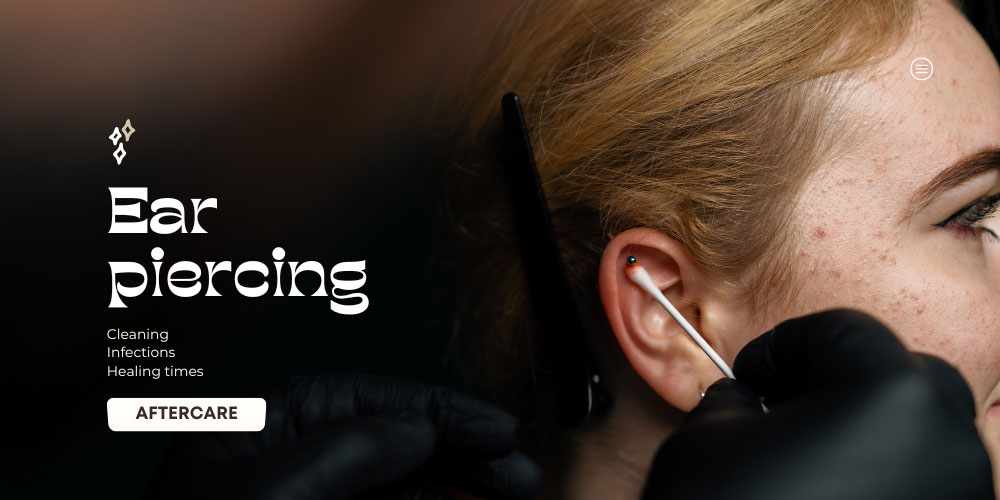
Getting a new ear piercing is exciting, but proper aftercare is crucial to ensure it heals well and stays infection-free. In this guide, we’ll go though everything from cleaning new piercings to dealing with infections, healing times, and even tips for tricky situations like cleaning ear wax when you have a tragus piercing.
Understanding healing times for ear piercings
Healing times can vary depending on the location of the piercing and individual factors. In general, earlobe piercings heal the fastest – usually around 6 to 8 weeks for initial healing (although generally it’s best to wait 2-3 months before changing your jewellery). Cartilage piercings (such as helix, tragus or conch on the ear) take longer – often 3 to 6 months, and in some cases up to 9–12 months for full healing. Keep in mind these timelines are approximate; your body’s healing process might be a bit shorter or longer, and anything interfering with the healing process will drag it out. During the entire healing period, you’ll need to take care to keep the piercing clean and avoid irritation.
Important: Even after the initial healing time has passed, a piercing may still be vulnerable. Do not remove or change the jewellery too soon, as the hole can close very quickly in a fresh piercing. Always wait until the piercing is well-healed (e.g. after a bare minimum of ~8 weeks for lobes, and several months for cartilage) before leaving jewellery out or switching to new earrings. If you have any doubt, consult your piercer to confirm if you’re ready to change jewellery.
How to clean a new ear piercing
Keeping a new ear piercing clean is the cornerstone of proper aftercare. You should clean a fresh piercing twice a day – once in the morning and once in the evening is a good routine. Over-cleaning isn’t necessary and can irritate the skin, so stick to a gentle twice-daily cleanse. Here’s how to clean your new ear piercing safely and effectively:
Wash your hands thoroughly: Always begin by washing your hands with warm water and soap for at least 20 seconds before touching your piercing or the area around it. This step prevents transferring bacteria to the open wound of the piercing.
Use a saline (salt water) solution: The safest and most recommended cleanser for a new piercing is a sterile saline solution (a mix of salt and water). You can buy pre-made sterile saline from a pharmacy, or make a DIY salt water solution at home. To prepare one, dissolve about ¼ to ½ teaspoon of salt in 1 cup (250 ml) of warm water – ideally use boiled (then cooled) water or sterile water. Make sure the solution is warm (not hot) and not too salty (it should taste like tears; overly strong salt solutions can irritate the piercing). Do not use iodised table salt if possible (non-iodised sea salt is best), and never add too much salt. A mild saline cleans effectively without stinging.
Soak or compress the piercing: Gently apply the warm salt water to your piercing. There are a couple of methods:
Soaking: If the location allows (like an earlobe), you can submerge the piercing in a small clean cup or bowl of the saline solution. Soak for a few minutes to soften any crusted discharge.
Compress: Alternatively, dip a clean cotton pad or gauze in the warm saline. (Avoid cotton wool balls, as these can shed fibres that get stuck to the piercing.) Hold the wet pad against your piercing for a few minutes. The warmth and salt will help loosen any “crusties” (dried lymph fluid) around the earring and hole.
Clean the piercing site gently: After soaking, use the saline-soaked pad or a cotton bud (Q-tip) to gently wipe around the piercing holes – both front and back. Remove any softened crust or discharge around the earring. Be very gentle and do not pick at hard scabs or force anything off. If something doesn’t come off, leave it for the next cleaning session rather than scrub – you don’t want to cause bleeding or introduce bacteria by being too rough.
Rinse (if needed) and dry: If you made your own salt solution, you might optionally rinse the area with plain clean water after soaking to remove excess salt residue (especially if you used a stronger mix). This step isn’t strictly necessary with a mild saline, but some people prefer it. After cleaning, dry the area with a clean paper towel or gauze. Pat gently to dry; do not rub. Avoid fabric towels, as they can harbour bacteria and snag on the earring. Dispose of the used pad/towel so you always use fresh materials each time.
***Don’t move the jewellery***: The old advice to spin an earring is outdated (it actually goes back to when ear piercing was done with a needle and thread!). Minimal handling is better for healing.
“You shouldn’t spin, twist, or rotate jewellery in your fresh piercing. We understand now that this can help introduce bacteria into the piercing channel. We also know that the healing tissue of a wound is pretty fragile, and twisting jewellery can damage that healing skin and cause irritation to occur. ”
Following this routine morning and evening will keep the piercing clean and promote healing. Do not apply harsh antiseptics or alcohol on a new piercing – products like surgical spirit, hydrogen peroxide or perfumed cleansers can irritate the piercing and slow down healing. Mild fragrance-free soap can be used on the surrounding skin if needed, but saline will generally suffice for the piercing itself. Remember to keep anything that touches your ear clean (like phone screens or pillowcases) and avoid letting hair products, perfumes or makeup get into a fresh piercing. With consistent cleaning and good hygiene, your new ear piercing should heal nicely within the expected timeframe.
Ear piercing aftercare dos and don’ts
To make aftercare easier, keep these tips in mind. They apply to any new ear piercing – whether it’s on the lobe or cartilage:
Dos:
Clean the piercing twice daily with saline, as described above. Consistency is key to preventing infection.
Wash your hands before touching your piercing or earrings – every time, no exceptions.
Keep the area dry after cleaning. If the piercing gets wet (from a shower, etc.), pat it dry with a clean tissue. Excess moisture can invite bacteria.
Be gentle and patient. Expect a fresh piercing to be a bit red and tender for the first couple of weeks. Some light crusting of clear or pale fluid is normal – it’s not pus. Only worry if you see signs of true infection (more on that below).
Leave the piercing jewellery in place the entire healing period. Keeping it in (and clean) allows the wound to drain and heal. If you remove earrings too soon, the hole may close or an infection could get trapped inside.
Don’ts:
Don’t touch or fiddle with the piercing unnecessarily. No twiddling the earring, and absolutely no dirty fingers on it. Moving jewellery excessively can delay healing and introduce germs.
Don’t use cotton wool balls or buds that shed fibres to clean the piercing. The fibres can get stuck and cause irritation. Use lint-free gauze or cotton pads instead, or cotton swabs with a firm stick (quality cotton buds).
Don’t apply alcohol, hydrogen peroxide, or strong antiseptic solutions on a fresh piercing. These can dry out and damage healing tissue. Stick to saline or products recommended by professional piercers.
Don’t submerge the piercing in unhygienic water. Avoid swimming pools, hot tubs, lakes, or the sea for at least the first few weeks. If you accidentally get the piercing soaked, rinse with clean water and do a saline clean afterward.
Don’t sleep directly on the piercing if you can help it. Pressure and friction can cause swelling or slow healing. Try sleeping on your back, the opposite side or use a travel pillow with a hole in the middle to take pressure off your ear. Clean your pillowcase regularly.
Don’t change the earring too soon. Wait until healing is complete (weeks or months, depending on the piercing) before swapping jewelry. Inserting new or unsterilised jewellery in an unhealed piercing can introduce bacteria or cause trauma.
Don’t ignore pain or unusual symptoms. Some soreness is normal, but intense pain, spreading redness, or foul discharge are red flags – address them promptly (see next section).
By following these dos and don’ts, you’ll greatly reduce the risk of infection and help your piercing heal as smoothly as possible. Good hygiene and a bit of patience go a long way toward a healthy piercing!
How to clean an infected ear piercing
Despite our best efforts, piercings can sometimes get infected. Bacteria can enter the wound and cause symptoms like increased redness, swelling, warmth, pain, and discharge of pus (which might be yellow, green, or white). You might also feel generally unwell or feverish in a more severe infection. If you suspect your piercing is infected, don’t panic – many minor infections can be treated at home, but you do need to take it seriously to prevent it from getting worse.
Key point – do not remove the jewellery if infection is present. Unless a doctor specifically tells you to take it out, you should leave your earring or bar in place even if the piercing is infected. Taking the jewellery out can cause the wound to close up and trap the infection inside, potentially leading to an abscess. Keeping the earring in allows any pus to drain out. So keep it in, keep it clean, and seek medical advice if needed.
Here’s how to care for a mildly infected ear piercing at home (if symptoms are only slight redness and discharge):
Continue your cleaning routine – and increase it to three times a day. Use the same warm saline solution to gently clean the area. A warm saltwater soak can help draw out impurities and reduce inflammation. You can also apply a warm compress (clean cloth soaked in warm salt water) to the piercing for a few minutes to help drainage and circulation. This is especially useful if you see a small bump forming, as the heat can help reduce any trapped fluid (for example, cartilage piercings sometimes get fluid bumps called granulomas, which warm compresses can improve).
Avoid harsh chemicals. Do not use alcohol, hydrogen peroxide, or ointments like Savlon or antibiotic cream unless prescribed, as these can impede healing under the jewellery. Saline cleanses are usually sufficient to manage minor infections by keeping the area clean and flushed.
Monitor symptoms. It’s normal to have some soreness, but if the piercing is extremely painful, or the redness/swelling continues to worsen even with cleaning, you may need professional help. Likewise, if you develop fever, chills, or the area is excessively swollen and hot, that indicates the infection could be more serious.
Seek medical advice if needed. In the UK, you can call NHS 111 for guidance or see your GP for an infection. See a doctor promptly if there is significant pus, spreading redness, or you feel unwell. Doctors can prescribe antibiotics (topical cream or oral tablets) for an infected piercing if necessary. The good news: treating an infection early and properly usually means you won’t have to lose your piercing – you can heal it without closing it.
During an infection, continue the saline cleaning routine until fully healed (even if it’s beyond the usual healing time). Do not stop aftercare too soon. And remember to never shove the earring back in if it somehow comes out of an infected piercing – if it won’t go in easily, get professional help. Once the infection clears, continue with normal aftercare until the piercing is fully stable.
If an infection does not improve or gets worse despite home care, follow up with a healthcare professional. In rare cases, a very severe infection might require the jewellery to be removed by a doctor and the wound treated, but that’s a last resort. Most of the time, with proper cleaning and possibly a course of antibiotics, you can save the piercing.
Cleaning healed piercing holes (old piercings)
After a piercing is fully healed, it generally requires minimal special care. Your body will have formed a secure fistula (a tunnel of skin) through the hole. However, even old ear piercing holes can get dirty or irritated occasionally – dead skin, natural oils and hair products can build up, and you might notice a bit of a smell or white cheesy debris (often jokingly called “ear cheese”). This is common, especially if you haven’t worn earrings in a while. Here’s how to keep old piercings clean and fresh:
Wash the area during regular bathing. Usually, normal showering with soap is enough to keep healed ear piercings clean. Lather the earlobe or ear around the hole with a mild soap, rinse well, and dry. Do this periodically (it doesn’t have to be daily if there’s no issue).
Clean the earrings and holes when you change jewellery. Every time you take earrings out or put them in, make sure they’re clean. You can wipe earring posts or hooks with a bit of alcohol or antiseptic to remove gunk (for healed piercings only; avoid harsh chemicals on new piercings). Let them dry before inserting. If an earring post looks grimy, give it a clean. Likewise, wipe your earlobe around the hole with a saline pad or alcohol wipe occasionally if you notice buildup.
Manage “ear cheese” buildup: If you detect a funky odour or whitish buildup in an old piercing, it’s just trapped skin oils and bacteria. Take the earring out (if it’s healed, it won’t close in the short time), gently clean the hole by wiping front and back with a saltwater-soaked cotton pad or a bit of rubbing alcohol on a cotton bud. You can also very gently insert the corner of a clean cloth or a specialised ear hole cleaning floss tool through the hole to clear out debris, but be careful not to scratch yourself. Clean the earring too (soak or wipe it), then put it back in. Doing this every once in a while will prevent that smell.
Avoid irritants: Even years-old piercing holes can get irritated or infected if abused. So always use earrings made of skin-friendly materials (sterling silver, gold, surgical steel, titanium – especially if you have sensitive ears). If you notice redness or irritation after wearing certain cheap earrings, it could be an allergic reaction to nickel or brass in the metal. Switch to hypoallergenic jewellery if so, and let the irritation settle with some saltwater cleanses.
In general, a well-healed piercing is low-maintenance: just keep it clean as part of routine hygiene and it should stay healthy. If an old piercing hasn’t had an earring in for a long time, insert earrings gently – never force them. If it’s closed up partially, you might need a professional to re-pierce rather than jab an earring through scar tissue.
Tragus piercing and ear wax
The tragus is the little flap of cartilage that partially covers your ear canal opening. Tragus piercings have become popular, and people with one may wonder how to clean their ears (remove ear wax) without disturbing the piercing. The good news is that a tragus piercing shouldn’t drastically affect ear wax – the wax is deeper in the canal. But you do need to be careful.
First, a reminder: Doctors generally advise against sticking cotton buds (Q-tips) deep into your ear canal at all, piercing or not. Your ears are usually self-cleaning, pushing wax outwards naturally. Inserting buds can push wax further in and risk injury or infection. So, whether you have a tragus piercing or not, it’s best to clean only the outer ear.
Here are some tips for ear care with a tragus piercing:
Be gentle with ear buds: If you do use a cotton bud to carefully wipe away visible wax at the entrance of the ear canal, do it slowly and gently, and avoid touching the piercing. With a fresh tragus piercing, you actually should avoid poking around that area until it’s more healed, unless absolutely necessary. If your tragus piercing is new and you feel wax is an issue, you can drip a little olive oil or ear drops into the ear canal (with your head tilted) to soften wax, rather than using a bud – just take care not to get those drops on the piercing wound.
Keep the piercing clean and dry: When cleaning your tragus piercing, let any excess saline or water drain out – you don’t want moisture trapped between the tragus and ear canal. Afterwards, pat the tragus and surrounding area dry with a paper towel. This will also take care of any wax residue around the outside.
Use a warm cloth: An alternative to cotton buds is to take a warm, damp washcloth and gently wipe around your ears after a shower. This can remove any wax that has worked its way to the outside, and it avoids any risk of snagging the piercing with a stick.
Professional ear care: If you know you have a lot of ear wax (some people just produce more), consider using ear drops (like olive oil drops or over-the-counter ear drops) to help clear it, or have it removed by a nurse via irrigation or microsuction. You can do this even with a healed tragus piercing – it won’t interfere as long as the piercer/doctor is gentle. Just ensure your tragus piercing is past the initial tender stage before doing things like syringing. If it’s still healing, stick to drops and let the wax come out on its own.
FAQs on ear piercing aftercare
Below are answers to some of the most frequently asked questions about ear piercing care.
How do I clean my new ear piercing properly?
Clean a new piercing twice a day with a warm saline solution. Wash your hands, then use a salt water soak or gentle compress to soften any crust, and wipe around the holes with a clean pad or cotton bud. Be gentle and avoid harsh chemicals – saline is usually all you need for routine cleaning. Keep up this routine for the entire initial healing period (6–8 weeks for lobes, longer for cartilage). Remember not to touch the piercing with dirty hands and not to rotate the earring, it's not necessary and can slow down healing.
Can I use salt water to clean my ear piercing? How do I do it?
Yes – salt water (saline) is the recommended aftercare solution for piercings. To make a salt water rinse, mix about a quarter to half a teaspoon of non-iodised salt in a cup of warm waterpatient.info. Ensure it’s fully dissolved. Then either soak the piercing in the solution or apply it with a clean pad. Salt water helps kill bacteria and flush the wound gently. Make it fresh each time or at least daily, and don’t make it too salty (more is not better, it can irritate). If this sounds messy, you can buy a pre-made sterile saline spray from a chemist – simply spray it on and let it sit, then pat dry. Avoid using other solutions like alcohol or peroxide; saline is effective yet gentle for regular cleaning.
How can I tell if my ear piercing is infected, and what should I do?
Signs of a possible infection include the piercing site becoming very red, swollen, warm, painful, or having a yellow/green pus discharge (as opposed to clear lymph fluid). You might also feel feverish or generally ill in severe cases. If you notice these symptoms, don’t remove the earring – keep it in. Begin cleansing the area with warm salty water three times a day to draw out the infection. If symptoms are mild, this might resolve it. However, if the area is extremely painful, the redness is spreading, or you have a fever, see a GP as soon as possible. They may prescribe an antibiotic cream or tablets to help clear it. Infections can usually be treated without losing your piercing as long as you act promptly and keep up with cleaning.
How long will it take for my ear piercing to heal, and when can I change earrings?
For an earlobe piercing, initial healing is about 6–8 weeks. After that, you can typically change to new earrings (although it's recommended to wait until 2-3 months have passed_, but continue gentle care as needed. Cartilage piercings (helix, tragus, etc.) take longer – at very least 3–6 months to heal enough for a change, and sometimes longer - with up to 12 months to be fully. Always ensure your piercing feels comfortable and shows no open wounds before changing jewellery. When you do change, make sure to insert clean, high-quality earrings. If an earlobe piercing is over 2 months old and looks healed, you can swap earrings briefly, but don’t leave it empty for long periods until you’re sure it won’t close up. For cartilage, it’s wise to have a piercer do the first jewellery change, since those piercings are delicate for longer. Patience is important – even if it feels fine at 8 weeks, a cartilage piercing might still require more healing time inside.
How do I clean an old ear piercing hole (one that’s already healed)?
You generally don’t need to do saline soaks on an old, healed piercing on a daily basis. Just keep it clean as part of normal hygiene. When showering, let some soap and water run over it, then rinse. If you notice buildup or a smell (“ear cheese”), take your earring out and clean the hole by wiping with a saline-soaked pad or a little alcohol on a cotton bud, and clean the earring too. Ensure the area is dry before putting earrings back in. Occasional cleaning of the jewellery and hole (for instance when changing earrings) will keep a healed piercing fresh. If a healed piercing becomes slightly irritated (maybe from an allergic reaction or after not wearing earrings for a while), treat it like a new piercing for a few days: clean with saline, avoid harsh products, and it should calm down.
What’s the best way to clean ear wax when I have a tragus piercing?
Having a tragus piercing means you should be a bit more careful, but the approach to ear wax is the same general rule: don’t stick cotton buds deep into your ear canal. Instead, focus on cleaning the outer ear. You can wipe just inside the opening with a damp cloth or careful cotton bud, but do it gently to avoid hitting the piercing. If your tragus piercing is new, try to keep any ear cleaning very superficial (or use ear drops to clear wax for the short term). Always dry the outside of your ear afterward so the piercing isn’t sitting in moisture. If you’re dealing with a lot of ear wax, consider using pharmacy drops (like olive oil drops) to loosen it – these won’t bother a healed tragus piercing and help the wax come out on its own. In summary, be gentle, keep the piercing clean and dry, and avoid any aggressive ear cleaning methods. When in doubt, have a healthcare professional clean out excess wax safely.
Should I rotate my earring or not? I’ve heard conflicting advice.
This is a common point of confusion. Older aftercare advice often said “twist your earrings daily.” The more modern consensus is not to rotate or twist jewellery as far as can be helped. You don’t want to tear the healing tissue by moving it too much. So, the best practice: leave the piercing alone as much as possible,
Can I swim or take a shower with a new ear piercing?
Showering is fine (and actually helps keep it clean, as long as you rinse off any soap). Just ensure you dry the piercing afterward with a paper towel. Swimming, on the other hand, is risky in the early days. Pools and natural bodies of water contain bacteria that can cause infection. It’s recommended to avoid swimming for at least the first few weeks after a piercing. If you must swim, consider using a waterproof bandage over the piercing, and clean it thoroughly with saline right after. Always clean your piercing after it’s been in contact with pool water, hot tubs, lake/sea water, etc. Showers are generally safe; baths are okay too, but be sure your tub is clean to avoid soaking the fresh piercing in bathwater for long.